A surgical option beyond hearing aids, cochlear implants (CI) offer people the ability to dramatically expand their range of hearing — enhancing quality of life with broader access to sound.
According to the National Institutes of Health, 5% of adults ages 45-54 have disabling hearing loss. That rate increases to 10% for adults in the 55-64 age bracket and jumps to 22% of those ages 65-74. Over half of people 75 and older have disabling hearing loss. Overall, fewer than 30% of people who could benefit are using any type of amplification.
In recent years, there has been increased interest in the range of hearing loss solutions, including a relatively new product called “over-the-counter hearing aids” which may be purchased by adults without the involvement of a hearing care professional. With Apple’s entrance into this market, the white air pods we are all familiar with are now being touted as a solution for those with mild hearing loss. Air pods are sometimes called a gateway device and are not a solution for most or over the longer term. Hearing aids fit and programmed for an individual by hearing care specialists are more appropriate for those with moderate to severe hearing difficulty. There are many advantages to having a professional support one’s hearing care journey, especially when it progresses beyond mild hearing loss.
Minimally invasive, marked improvement
When one’s hearing loss progresses to profound at certain frequencies, understanding speech becomes challenging even when using hearing aids. People stop socializing in groups and their lives become more limited to quiet places with a few people. The numbers of older adults who find themselves in a situation in which hearing aids do not provide sufficient access to sound is increasing as our population ages.
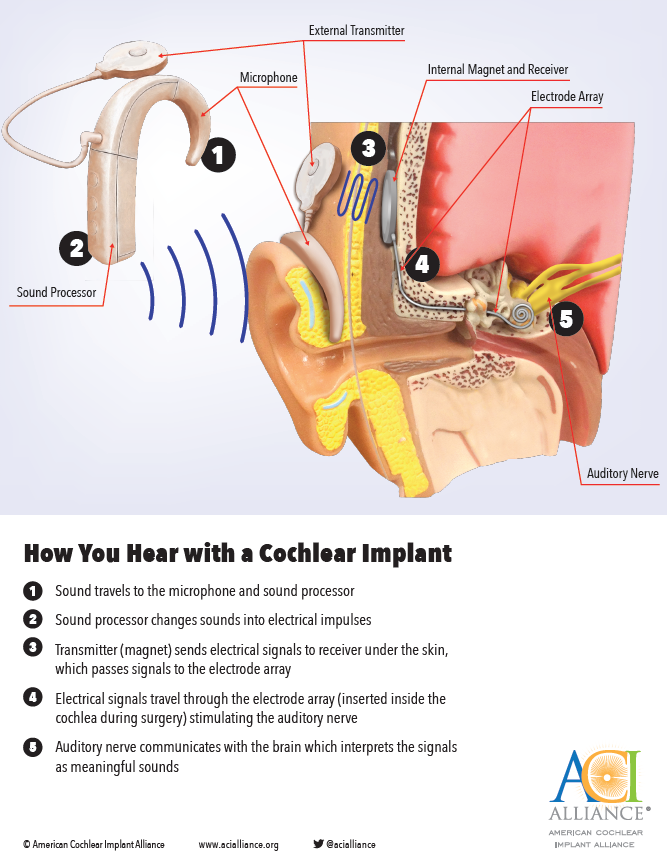
Cochlear implants (CI) are for people of any age who do not benefit sufficiently from hearing aids though fewer than 10% of adults who could benefit have one. The procedure involves a two-hour surgery which is usually completed as an outpatient procedure. During the surgery, an electronic medical device is inserted into the inner ear bypassing the damaged cells in the cochlea to provide stimulation and a sense of hearing. Over a relatively brief period — often two to three months — patients learn to utilize their new sound. Typically, CI patients enjoy improved understanding in their discrimination of words in sentences of 30-40% over what they could understand with well-fit hearing aids. Older adults — those in the Medicare age bracket of 65 plus — are now the fastest growing population segment for cochlear implantation.
Opening a world of sound

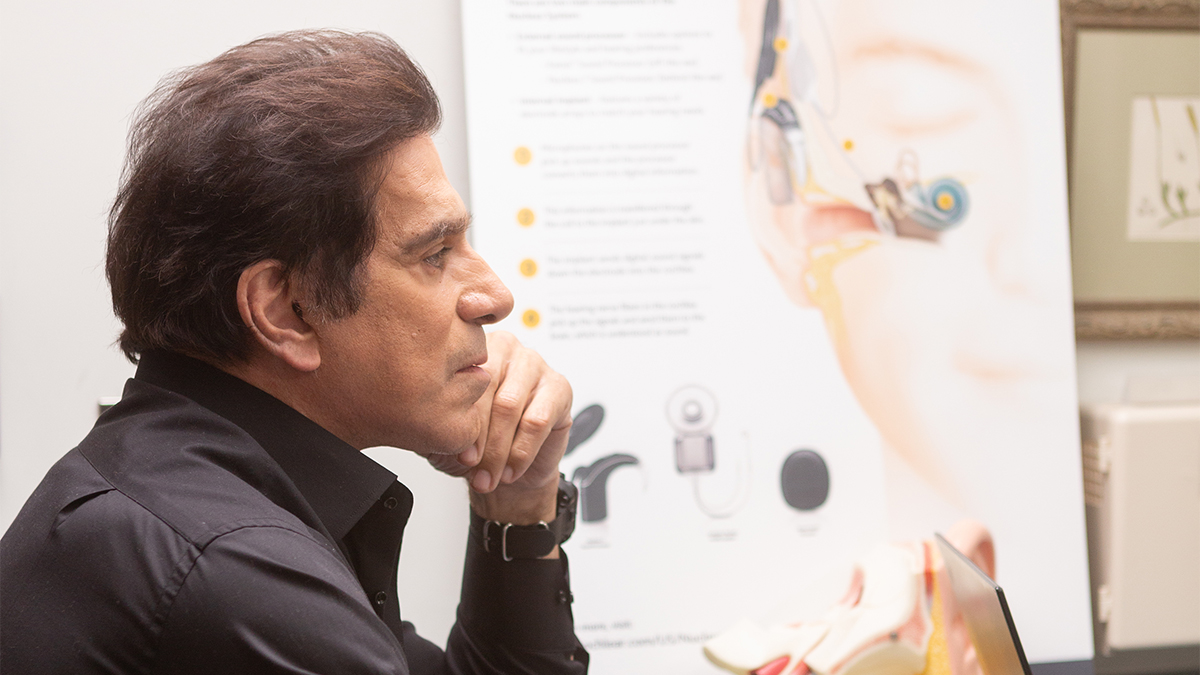
One of those who received a cochlear implant after a lifetime of struggling to hear with hearing aids was Lou Ferrigno, “The Incredible Hulk.” We talked with Lou recently about his CI outcomes and why he waited so long to get one. Lou noted that he pursued a CI because of his desire to stay engaged and healthy as he aged. He is thrilled with his CI outcomes and the opportunity his improved hearing has afforded him to stay involved in acting, fitness promotion, and all aspects of his active life.
I also asked him why he waited so long. His thoughtful response is reflective of what we have heard others say: “I was afraid of losing my residual hearing.” In fact, modern cochlear implants are designed to retain residual hearing. With greater access to sound, most CI recipients dramatically improve their ability to hear in a range of settings. Lou urges anyone who is a CI candidate — including older adults — to move forward for an improved quality of life.
