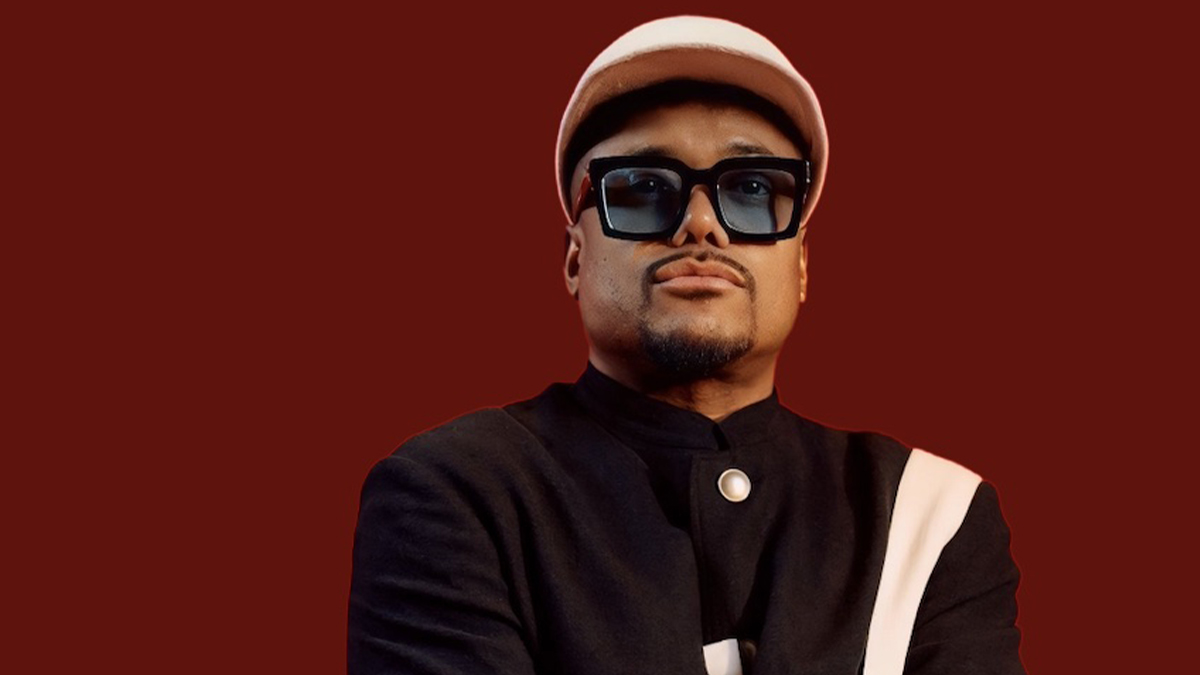
Known professionally as apl.de.ap, founding member of hip hop group Black Eyed Peas Allan Pineda Lindo describes his experience with nystagmus, rapid involuntary eye movement, beginning during childhood in the Philippines to later diagnosis and treatment.
Can you share your experience growing up with nystagmus and how it shaped your perspective on vision health?
It was really hard dealing with nystagmus and living in Sapangbato (a village in the city of Angeles, Pampanga, Philippines). When you’re a kid and something’s wrong, you’re just weird — different. I usually shied away from participating in class, because I couldn’t see the board. Then through Pearl S. Buck International, and my father Joe Ben Hudgens, I was given an opportunity to come to the U.S. to meet with ophthalmologists. They discovered what was wrong with my eyes, nystagmus, and that it was treatable, but only before a certain age. The inability to access that kind of care shaped me and today my foundation work on projects to bring others access to vision health here in the Philippines.
What were some of the biggest challenges you faced in your music career due to your vision impairment, and how did you overcome them?
As you can imagine, doing anything with impaired vision is tough. Before we got famous, having to navigate airports and travel was not fun. I would have this solo section in our shows where I would dance at the end of a narrow apron. I would make sure to go out before and measure how wide it was so I wouldn’t fall off! The team helped me put contrasting tape on the floor so I can see where the lines were, as often the stage was black, and we’d perform at night.
In 2012, you underwent eye surgery to improve your vision. How did that experience change your daily life and your approach to eye care?
Dr. Brian Boxer Wachler, M.D., gave me the gift of sight. I’ll be forever grateful. He gave me a kind of permanent contacts, but my eyes still vibrate. It has slowed down considerably though so my vision continues to improve. My eyes are still too shifty to do things like drive, but I’m able to be a lot more independent, and it gets better by the day.
What message do you have for people who are struggling with vision impairments and may feel limited by them?
It gets better. Working through the conditions gives you some real creative problem-solving skills and makes you stronger. There are some major advancements in tech that can help make this better, as well. But I would implore people with vision impairments to continue to look for resources. They’re out there — we just have to find them.
What steps do you take today to maintain your eye health, and what advice would you give others on protecting their vision as they age?
It’s a process. Keep them hydrated. Wear sunglasses. Keep going to your doctor. We often don’t think about eye health when we think of maintaining ourselves, but eyes are a great indicator to someone’s health.
