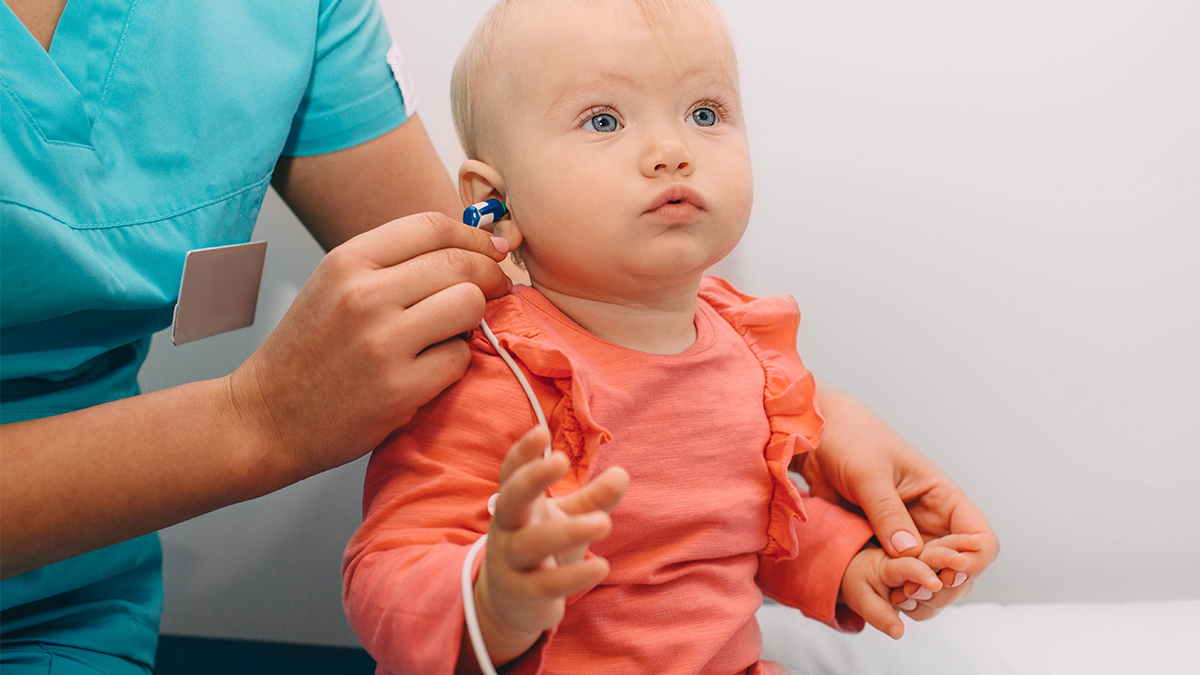
One in every 500 infants is born deaf or hard of hearing, and some children may develop hearing loss later due to other causes. Families can position their children for a bright future through means of professional support and community connections.
In the United States, one in every 500 infants is born deaf or hard of hearing. Most of these children are born to parents with typical hearing, which usually makes the news of any hearing loss unexpected. Families have many options to address their child’s hearing and communication needs. Regardless of the path they choose, the earlier diagnosis and intervention occur, the better the outcomes — in nearly every aspect of a child’s life.
Timeline for success: 1-3-6 guidelines
Health experts promote the 1-3-6 framework for hearing loss:
- By 1 month: All babies should have a hearing screening. If a child doesn’t pass it, they should be referred to an audiologist for further testing.
- By 3 months: Babies who didn’t pass their screening should receive a comprehensive evaluation from an audiologist to confirm whether a hearing loss is present.
- By 6 months: Babies with confirmed hearing loss should start early intervention, which includes medical, hearing, and educational support.
Currently, 96% of U.S. infants are screened at birth for hearing loss. This significant public health success is the result of legislation that was enacted in 2000. Before then, hearing loss often wasn’t identified until a child’s toddler years. Late diagnoses can affect brain and communication development — and ultimately have a long-term impact on children.
When babies with hearing loss are identified early and enrolled in intervention services by six months of age, they can develop language and learning skills that equate with those of their hearing peers by the time they start kindergarten. This is why the 1-3-6 guidelines are critical.
Although most babies receive a newborn hearing screening, only 40% of infants who do not pass their hearing screening are diagnosed by three months of age — and just 41% of infants diagnosed as deaf or hard of hearing are enrolled into early intervention by six months. Additionally, potential cuts in federal support could threaten the future of universal newborn hearing screening.
Long-term impact of unaddressed hearing loss
According to the American Speech-Language-Hearing Association (ASHA), unaddressed hearing loss in children can have life-long repercussions that include:
- Delays in language and speech skills
- Learning problems and reduced academic achievement
- Social isolation and poor self-confidence
- Reduced career opportunities
Because some children may not have hearing loss at birth but develop it later from illnesses, infections, noise exposure, or other causes, families should stay attuned to the signs of hearing loss. They vary by age but can include not responding when you call their name, having difficulty following simple directions, and needing a higher TV volume than others.
Intervention and treatment approaches
Families can take several paths if their child has hearing loss. Support services for children who are deaf or hard of hearing promote early language development — whether spoken and/or signed — so that children can progress at the same rate as those without hearing loss.
Most communities have early intervention services that cover children from birth until their third birthday. While there is a process for determining if a child is eligible for these services, evaluations are available from local education or health departments.
The early intervention team guides eligible families through various communication options, including hearing technology (hearing aids and cochlear implants), listening and spoken language skills, a visual sign language, or a combination of approaches. Once children turn three years old, they may qualify for services through their local school system.
Family support
Often, families benefit from peer and other sources of support. Organizations such as Hands and Voices, the A.G. Bell Association for the Deaf and Hard of Hearing, and the American Society for Deaf Children offer helpful programs and services. ASHA participates in a national free texting program that connects families of children with hearing loss to trusted information and resources (interested caregivers can text HEAR to 274-448 to join).
Through early identification, professional support services, and peer and community connections, families can position their children for a bright future. For more information, visit www.asha.org/public.
