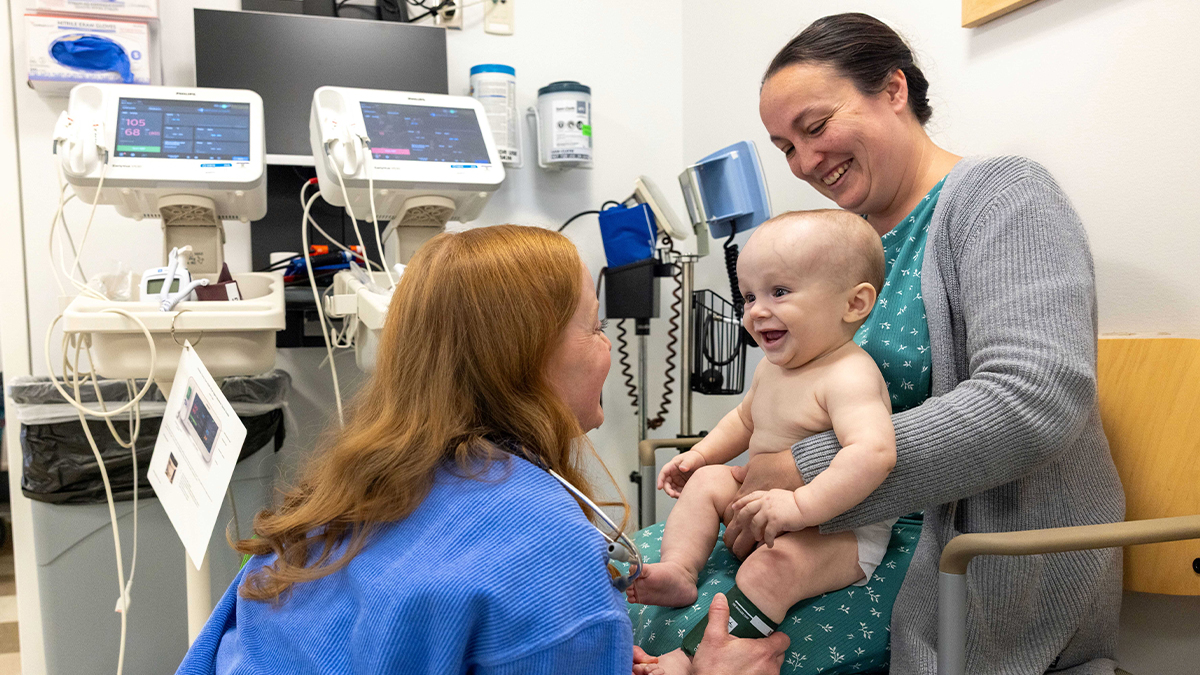

Investigational transplacental “bridging” therapy, followed by rapid postnatal treatment, aims to protect a baby’s motor neurons during a critical window before and immediately after birth.
When Stacy Auker found out she was pregnant, she knew a diagnosis of spinal muscular atrophy (SMA) was a possibility. “We have relatives who have been affected, so I got tested during pregnancy with each of my kids,” Auker explained.
This time, her baby did test positive for SMA type 1, a severe neurodegenerative genetic condition that typically results in death in early childhood. Despite the news, Auker and her husband, Clyde, remained optimistic, knowing that treatment options were now available.
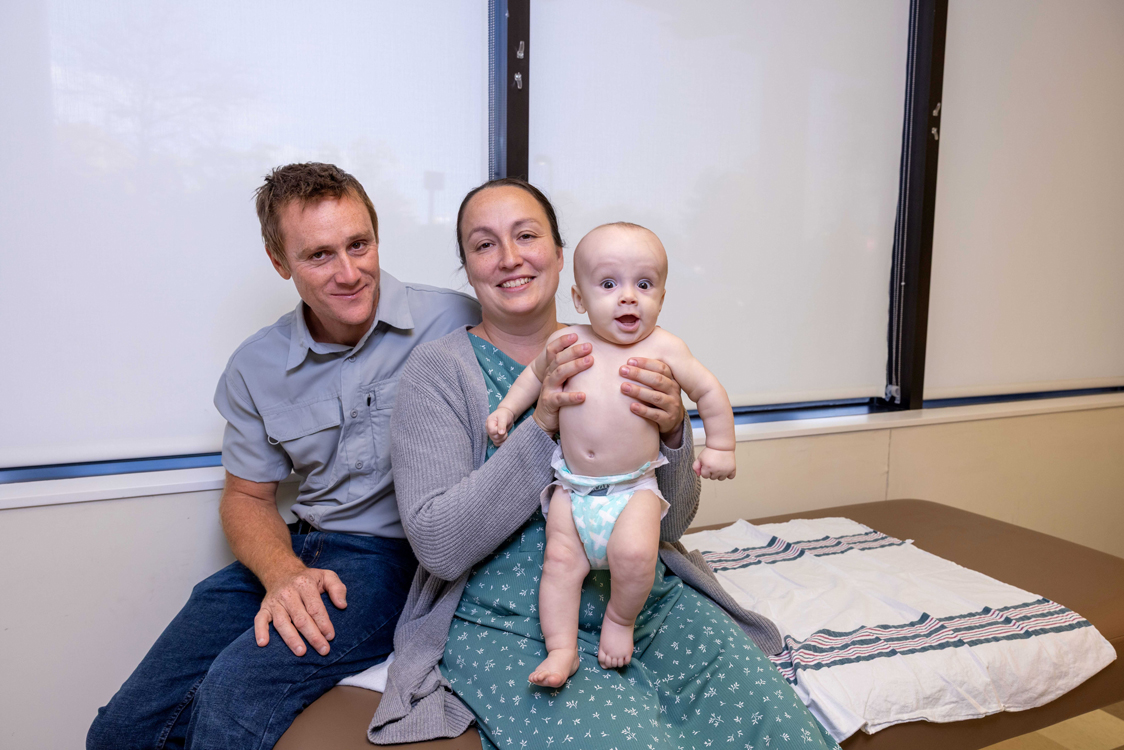
Stacy’s physician referred her to maternal-fetal medicine specialists at Nationwide Children’s Hospital, the same place where researchers led the development of Zolgensma®, a one-time gene therapy approved by the U.S. Food and Drug Administration (FDA) in 2019 to treat SMA type 1.
The timing was nearly perfect when the specialists met with the Aukers. Adolfo Etchegaray, M.D., chief of Fetal Medicine at Nationwide Children’s, was aware of a new approach for prenatal treatment of SMA recently published in The New England Journal of Medicine. The investigational therapy involved risdiplam, a medication for the production of SMN protein, given orally to mothers during the third trimester. He approached the Aukers with this experimental, but exciting, new treatment option.
Upon Stacy’s consent, team members pursued investigational approval from the FDA for use of risdiplam before birth. The Genentech Patient Foundation provided the drug free of charge, and Stacy started taking risdiplam at Week 34 of her pregnancy.
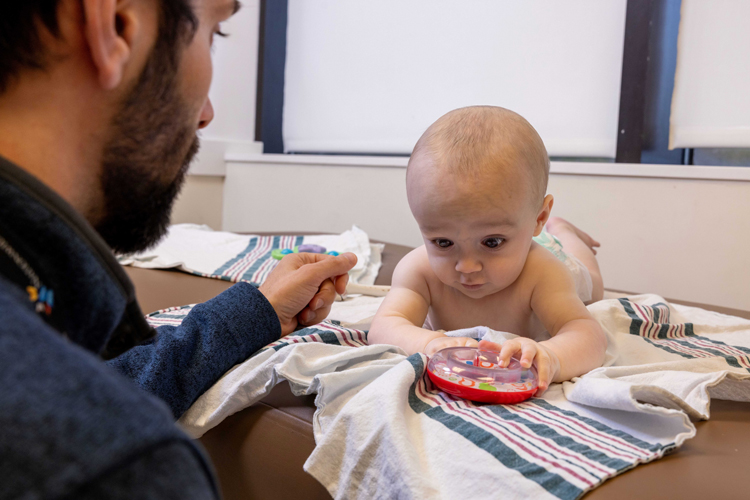
At Week 38, their son Bryson was born, apparently healthy and with normal muscle tone, reflexes, and motor function. He was given his first postnatal dose of risdiplam the day after delivery. He then received gene therapy at 10 days old, making him one of the youngest patients ever to be given Zolgensma.
“Cases like these are changing the paradigm of managing some monogenic conditions,” Dr. Etchegaray said. Nationwide Children’s offered the Auker Family the full continuum of care from its Maternal-Fetal Medicine Center to its Gene Therapy Center of Excellence to its SMA Clinic.
Dr. Etchegaray and his colleagues presented their findings at the 2025 meeting of the Society for Maternal-Fetal Medicine and plan to publish updated findings in a case series with a handful of other institutions that have initiated risdiplam therapy prenatally.
“This is an example of how fetal medicine is personalized, preventative, and participative,” Dr. Etchegaray noted.
The Aukers continue to provide samples for research with the Nationwide Children’s team and follow up with specialists in the SMA Clinic. Bryson continues with daily risdiplam and, as of the age of 8 months, shows no signs of SMA.
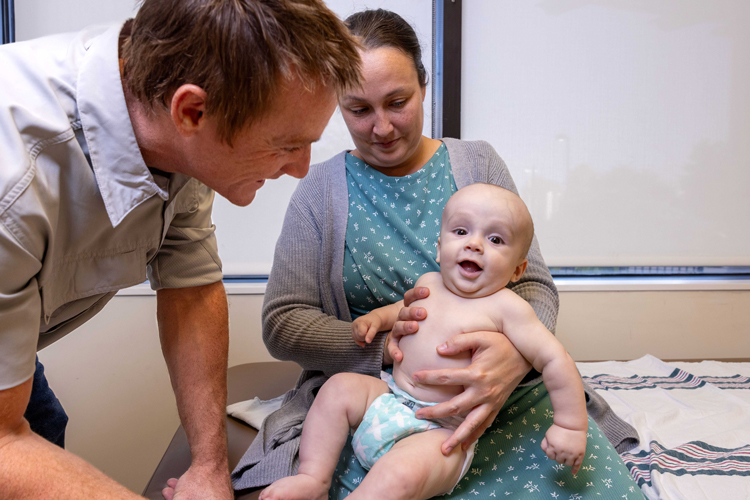
“His siblings adore him — they love to make him laugh. We are hopeful Bryson can run and play with them in the future, Lord willing,” said Stacy, who understands this outcome would have been impossible prior to the development of these treatments.
Well known for studying and treating rare diseases, Nationwide Children’s researchers have developed three FDA-approved gene therapies: Zolgensma® and Itvisma® for SMA, and Elevidys®, a gene therapy for Duchenne muscular dystrophy approved in 2023.
Discover more about Nationwide Children’s rare disease research at nationwidechildrens.org/research
