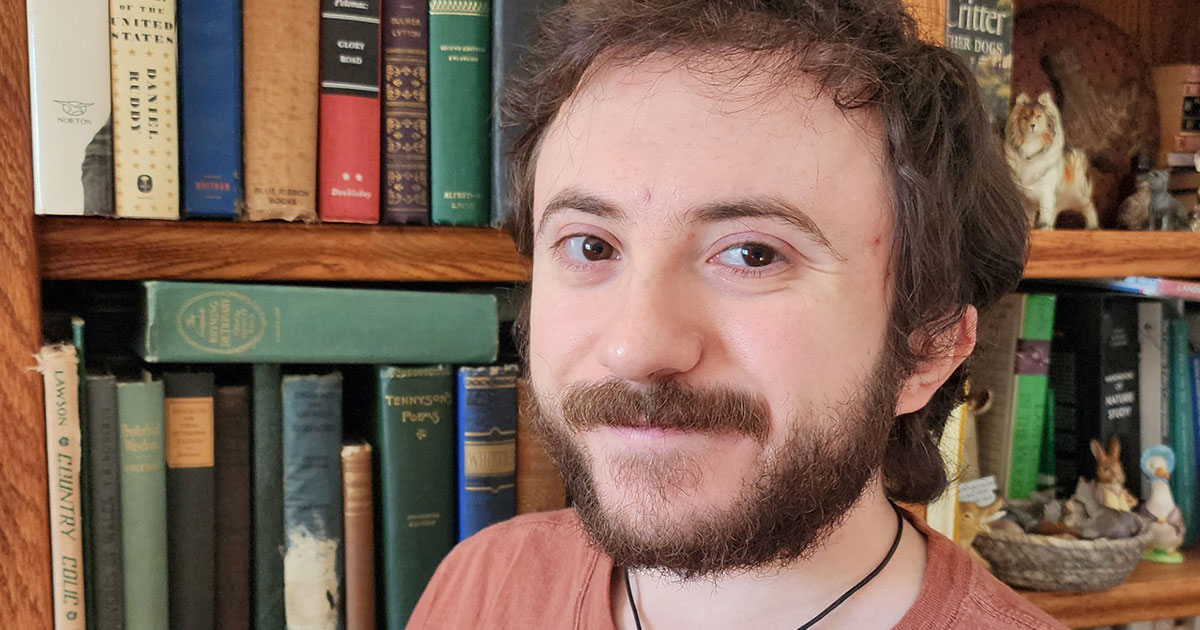
From childhood stardom to adult advocacy, actor Atticus Shaffer opens up about navigating Hollywood and life with osteogenesis imperfecta.
How has living with osteogenesis imperfecta (OI) shaped both your personal journey and your acting career?
I think any person who contends with any form of challenge, whether it be physical, mental, or emotional, will inevitably face the question, “Would I be better off without this challenge?” Obviously, for many, when one is in the thick of genuine pain, especially chronically so, it is very difficult to say, “I would gladly take this again for such and such a result.” However, given that I am a Christ follower, I do believe that everything happens for a reason. I have been given the challenge of living my life with OI for a reason.
My mother (who also has the same genetic orthopedic condition) and I discuss often that, because of all the pain from injuries and surgeries we have endured, those events have helped us not only to have compassion, empathy, and sympathy for others — traits that are severely lacking in this modern age — but also, from attending specialty hospitals and clinics for treatment throughout my life, we were exposed to a wide range of medical challenges and injuries that surpassed my own. This furthered our own understanding of various trials children and adults can contend with, and helped us to still see them as people, not things.
As far as the acting side is concerned, it’s not so much that having my condition greatly influenced my acting (after all, each character I played is unique and without any medical challenge, save for Ono in Disney’s “The Lion Guard”) but rather that I, through the platform I have been given throughout my career, am able to make those genuine connections with others and offer understanding and validation to those who are fans or follow shows I am in, who themselves contend with challenges. This is a huge reason why I’m grateful to participate in this interview, so thank you for this opportunity.
What do you wish more people understood about living with a rare condition?
This is an excellent question, and one that has a bit of a complex answer. I’m going to be very bold and say the completely honest reality: Unless someone has actually contended with some sort of challenge personally, it will be incredibly difficult for them to have a full, complete “understanding” of what it is like to live with a rare medical condition.
If person A wants to learn more about person B, who has a medical challenge, person A needs to allow person B to be honest in conveying the very real struggles of living with their condition, and person A should not default to superficiality in responding to them. However, person A and person B should not allow person B’s condition to define them and therefore dictate their view of them.
For my case specifically, I never view myself as a “disabled person” but rather “a person who happens to have a medical condition.” This doesn’t nullify the very real pains, challenges, and hardships I’ve faced, but it also doesn’t make my condition a prison, physically or mentally.
What advice would you give to young people with rare medical conditions who are pursuing their passions?
Be open to being able to pursue your passions in ways you didn’t expect you would. One of my earliest memories of my mother explaining our medical condition to me was when she said, “You may develop an interest in football, but having OI, it would be very dangerous for you to play the game yourself. However, you can still be a sports commentator or a magazine writer.” While I can assure you I am probably one of the most unathletic people you have ever met, I have been able to apply this principle to countless situations and interests in my life.
I’m 27 now, and when I was 16, I was a typical teenager in that I thought my capabilities were far more than what my physical body realistically could achieve. Now, I don’t have the bandwidth to willingly contend with the aches, pains, and potential injury I could incur from doing those activities that younger me thought were fine to do. However, in being more mature, recognizing my limitations, and choosing to work within them, I would actually say I’ve been able to do far more than I ever thought I could.
What strategies or routines have been most helpful in managing life with osteogenesis imperfecta?
I’m going to speak boldly here and make a few comments about the medical world. I feel, and I think others with challenges would agree with me, that if anybody has a right to speak on the medical system, world, and persons therein, it would be those of us who have had to receive significantly more — and more complex — care from those facilities and people.
I’ll reiterate my above point that we live in a day where compassion for fellow man has dwindled to the point of near non-existence. There are precious few Florence Nightingales in the nursing world, and even fewer doctors who cherish the Hippocratic Oath as they once did. I am fortunate in that, from the moment I was born, my mother had to fight — and I mean fight — very hard in order for me to get into the correct facilities, with the correct doctors, who gave me the proper treatment I needed to have the foundation to be a functioning adult today.
However, my mother has spent the last eight years in a steady decline because many of her doctors in that time were completely ignorant of our condition and its complexities, and “practiced” medicine on her instead of giving proper treatment. Also, for some reason, many medical staff want to brush off symptoms that we express to them as our being “dramatic,” instead of listening to us and investigating what we are saying in a clear way. I could write volumes on our experiences, and perhaps that’s something to speak on in detail at some point.
To directly answer the question posed, though, due to the myriad of surgeries, treatments, and work done in my youth, I’m in a position now where careful exercise, eating well, and other homeopathic self-care routines help me to function well. That doesn’t remove my condition, of course, and so I always need to be careful with what activities I decide to do and listen to my body and use common sense when navigating my daily life.
Are there any tools, therapies, or practices that have made daily life or work easier for you?
Some of the biggest tools I’ve been taught to use for living my life with OI are the ability to improvise and adapt in situations to achieve the task I need to, but in a way that is safe for me. Also, the ability to ignore “peer pressure” I may place on myself because I see someone else doing the same task in a different way. It doesn’t matter if I need to make more trips out to the trash can with lighter-weight trash bags, compared to someone who can take the entire thing out in one go; I still achieved the goal of taking the trash out, and I did so safely.
My biggest inspiration for this is, once again, my mom. I am not kidding that, in her prime, my mom looked and functioned like Sarah Connor from “Terminator 2.” I grew up on a small homestead where my mom, at one time, was caring for chickens, ducks, goats, a miniature horse, dogs, cats, a rabbit, and a huge garden. Most of the care-related chores for all of those things fell to my mom. She had to clean the coops, feed the animals, carry hay bales, and turn soil in raised beds. She got herself to achieve that level of strength through a lot of hard work and dedication.
Would she occasionally sustain injuries from doing these chores? Unfortunately, yes, but she would heal, get back on her feet, and not repeat the thing that caused the injury, so she could continue living the lifestyle she wanted to live. I’m so proud of her for everything she has ever done, especially for my brother and me, and I want my life to carry on her torch of wisdom and strength in navigating life with our medical condition.
