
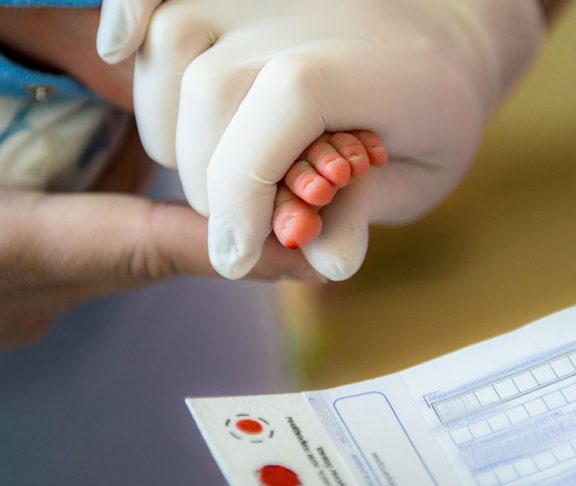
Advances in genomic sequencing offer the potential to significantly increase the number of genetic conditions that can be identified at birth and treated.

Mira B. Irons, M.D., FACMG, FAAP
President, American College of Medical Genetics and Genomics
Michelle McClure, Ph.D.
Director of Public Policy, American College of Medical Genetics and Genomics
Each year, newborn screening (NBS) saves thousands of lives by identifying babies who appear healthy at birth but have serious medical conditions requiring early intervention. Without timely treatment, these conditions can lead to irreversible harm or even death. Today, nearly every baby born in the United States undergoes NBS within the first few days of life, regardless of birthplace, geography, or socioeconomic factors. The screening consists of a hearing test, a pulse-oximetry test to check for congenital heart conditions, and a heel prick to check for a panel of genetic conditions. While each state runs its own NBS program, these efforts are supported by federal resources, including funding, guidance, and quality standards.
Despite its decades-long success, the current NBS includes fewer than 40 genetic conditions. However, advances in genomic sequencing, a powerful technology that examines the majority of an individual’s DNA, offer the potential to significantly increase the number of conditions that can be identified at birth and treated. Clinical studies have shown the benefits of incorporating genomic sequencing into NBS, also referred to as genomic NBS (gNBS). These studies have evaluated 200-500 actionable conditions, far beyond the current standards.
A new era begins
In 2025, Florida became the first state to offer gNBS for all newborns. Families who choose to participate can have their baby’s genome sequenced at no cost, enabling screening for approximately 500 genetic conditions. Federally, the National Institutes of Health Common Fund Venture Program has funded the first national initiative to assess the feasibility of incorporating gNBS into all public health programs throughout the United States. The study, referred to as Building Evidence and Collaboration for GenOmics in Nationwide Newborn Screening (BEACONS), will also examine public perceptions and ethical considerations surrounding gNBS.
While sequencing at birth will allow earlier diagnosis and intervention for numerous conditions, its potential reaches far beyond infancy. Because a person’s DNA does not change, genomic information can support health decisions throughout life, guiding surveillance, preventive care, and treatment as new therapies emerge. Together with advances in targeted genetic therapies, gNBS represents a transformative step toward a future where healthcare is proactive, personalized, and available to all.
Challenges to address
However, integrating genomic sequencing into NBS also presents challenges. These include managing large amounts of data, ensuring storage in medical records, addressing privacy concerns, and preventing genetic discrimination. Policymakers, clinicians, and ethicists must also determine what types of results should be shared and at what age. For instance, should information relevant only in adulthood be disclosed to parents of a newborn or withheld until the individual is old enough to make their own healthcare decisions?
Another critical challenge is workforce capacity. There is a significant shortage of physicians who are formally trained in genetics, referred to as medical geneticists or clinical geneticists, as well as laboratory medical geneticists, to interpret genomic data and genetic counselors to guide patients in understanding their results. Expanding screening without ensuring accessible clinical expertise risks overwhelming an already strained system.
As we stand on the brink of this new era in public health, genomic sequencing offers an unprecedented opportunity to redefine how we approach lifelong health. By expanding the conditions detected at birth and empowering families with actionable information, gNBS can create a foundation for truly personalized care. Continued collaboration among states, federal agencies, clinicians, researchers, patient advocates, and the general public will be essential to ensure that gNBS is implemented ethically and effectively. The future of NBS is here, and it promises a healthier tomorrow for generations to come.
