
As healthcare safety challenges grow more complex, protecting frontline workers is essential to supporting patients, strengthening trust, and delivering quality care.

Mike Shore
Senior Vice President/General Manager of Enterprise, Axon
Healthcare workers show up every day to care for others. But for too many nurses, clinicians, and frontline staff, their own workplace can be unpredictable and, at times, unsafe.
In healthcare, safety is foundational. When patients and staff do not feel safe, the effects can ripple across the entire environment — influencing well-being, trust, and the ability to deliver quality care. Safety and security challenges can also strain operations, pulling teams away from their core mission and making already demanding work even harder.
New survey data from Axon underscores how closely healthcare leaders connect safety with the broader performance of their organizations. Nine in ten healthcare leaders say safety and security is either an essential or high priority, and 84% report at least moderate operational disruption tied to safety or security challenges in the past year.
For healthcare workers, those pressures are felt on the front lines. They are often the first to enter a patient room, the first to respond when tensions escalate, and the people patients and families turn to in moments of fear, confusion, or crisis. Protecting staff is not separate from protecting patients. It is part of creating the conditions where safe, reliable care can happen.
As hospitals face more complex safety challenges, leaders are looking for ways to strengthen awareness, readiness, and frontline support. According to Axon’s survey, more than eight in ten healthcare leaders favor increasing investments in technologies or strategies designed to improve both safety and operational efficiency.
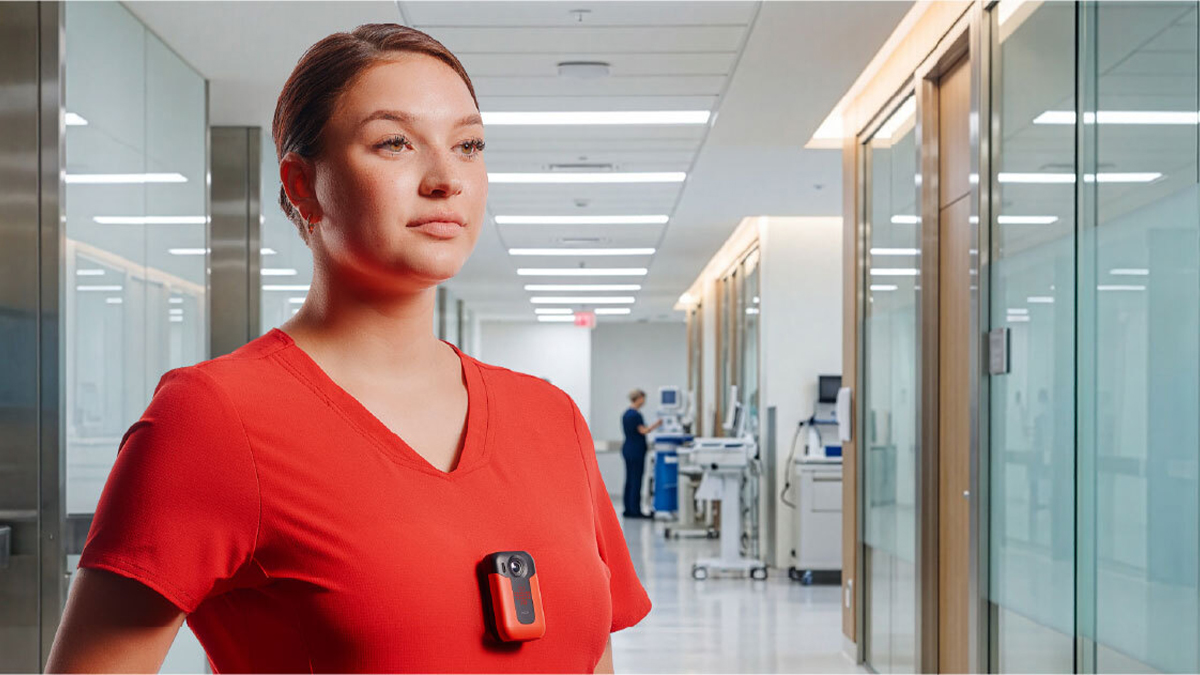
That investment can take many forms, including body-worn cameras for security or frontline staff. These tools can help provide a visible deterrent, support incident documentation, and give employees a practical way to call for help when a situation escalates. Axon Body Mini is a compact body-worn device designed for frontline environments, with features including a built-in panic button, live streaming, and reliable evidence capture.
Hospitals are also rethinking the role of the security operations center. Rather than relying on disconnected cameras, alerts, and workflows, healthcare organizations can use real-time awareness platforms to bring critical information into one view. Fusus, Axon’s real-time operations platform, unifies live video, alerts, and field data so teams can respond with greater speed and coordination. AI-powered tools like Axon Vision are designed to further strengthen that response by analyzing activity across connected camera feeds and surfacing alerts inside Fusus, helping teams identify emerging situations like patient distress, safety incidents, fires, or unauthorized access as they unfold and respond with greater clarity.
Nurses and other healthcare workers bring remarkable skill, compassion, and resilience to every shift. Supporting staff and the patients they care for requires an ongoing commitment to the environments they work in, the risks they face, and the tools they need to feel safe while caring for others.
A safer healthcare system starts with protecting the people at the heart of it.
To learn more, visit axon.com/healthcare
