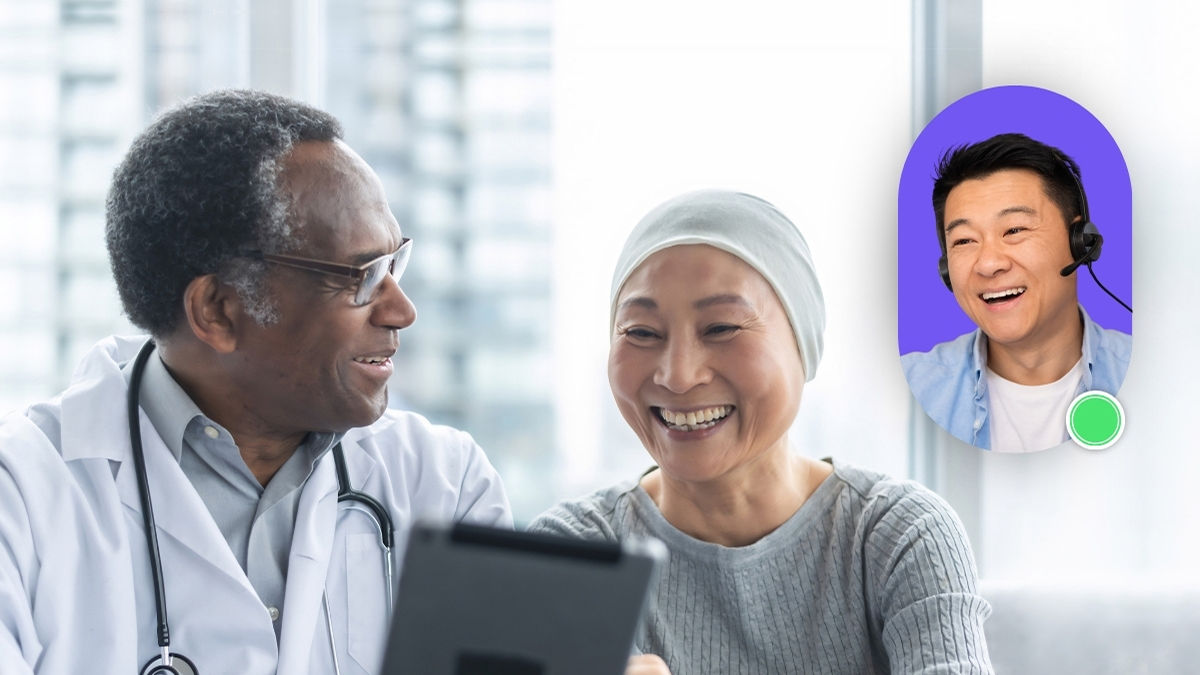


When patients can’t fully communicate with their caregivers, their risk accumulates across every stage of care.

Dr. Richard Brecht
Co-Founder and Chief Language Officer, Jeenie
A dangerous situation arises when clinicians misunderstand patients’ descriptions of symptoms. Whether at intake, consent, treatment, or discharge, it’s no exaggeration to characterize many such exchanges as life-or-death. Limited English proficient (LEP) patients run this risk millions of times a day, as do doctors, hospitals, and insurers.
The need to ensure every patient has the same level of quality healthcare is why language access belongs in every “patient safety” conversation. In one peer-reviewed study from six Joint Commission-accredited hospitals, 52.4% of adverse events involving LEP patients were linked to communication errors, compared with 35.9% for English-speaking patients. And language support must be professional and HIPAA-certified. Family members or untrained bilingual staff had an 11x higher error rate compared to professional interpreters.
Recent peer-reviewed healthcare evidence for the cost-effectiveness of language access includes:
- 55% of malpractice cases come from miscommunication between patients and caregivers
- Doctors spend an extra 10-30 minutes initiating every interpreting session, which could add up to tens of millions of dollars of wasted provider/surgeon time a year.
Jeenie helps build quality and access into healthcare’s daily workflow. The Jeenie platform connects clinicians to qualified interpreters in 300+ languages, including ASL and rare or Indigenous languages, with average connection times under 8 seconds. It is supported by more than 20,000 interpreters and has a 4.9-star (out of 5) client rating. For low-risk interactions, Jeenie also offers AI interpreting with escalation to a live interpreter when conversations turn complex.
Approximately 1 in 12 people in the United States are at risk of adverse events because of barriers created by language discordance. Clearly, patient safety starts with every patient being understood, every time.
Click here to learn more about Jeenie
