Actress and advocate Tatyana Ali opens up about her traumatic first birth, the Black midwife who changed everything, and why she founded Baby Yams.
How did your own journey into motherhood shape the way you think about maternal health and the importance of listening to mothers?
I didn’t really consider maternal health outcomes or maternal health disparities ten years ago when I was pregnant with my first child. I didn’t know that black mothers are still 3-4 times more likely to die in childbirth. I was newly married and excited to start my family. I took good care of myself during my pregnancy, we were very healthy and so in love. Nothing could have prepared me for what happened. I experienced obstetric violence in the hospital and it was very traumatic. Our birth plan was totally ignored. We went in very healthy and what took place resulted in my son spending time in the NICU.
When we were finally discharged, we left right away, in the middle of the night—like an escape. We were extremely traumatized and had a newborn baby to care for. It was hard for us as a couple. I wish I could say I was in a fighting mood then, but I wasn’t. All I wanted to do was take care of my son as best as I could.
When my husband and I found out we were expecting again, everything shifted into focus in a different way. I couldn’t go back to the healthcare providers and systems I had relied on before. Honestly, I was terrified. I didn’t know where to turn, but I knew I had to find a better way.
On that journey, I met the founders of Black Mamas Matter Alliance and leaders in the Reproductive Justice movement. They gave me language for my pain and provided answers to protect our future. Very pregnant with my youngest son, I started my work as a Black Maternal Health Advocate, sharing my story to amplify their work and the remedies that have come from their research. So, you see, they were the first people I encountered who actually listened to me. If someone had been listening to me ten years ago in the hospital, my experience would have been very different.
The discovery that my story is commonplace for many Black families in this country has continued to break my heart. There are so many stories in every space I’ve been in. We all have stories. Women who are now grandmothers have stories like mine. I’ve been an advocate for 7 years now and these stories are still being told. Recently I met a mother, Mercedes Wells, who was turned away from a hospital in Illinois and who gave birth to her baby girl in her husband’s truck. They didn’t believe Mercedes in her moment of need. She was compelled to give birth in a parked car on the side of the highway. She deserved better. We all do.
Why is listening to mothers such a critical part of maternal care?
Firstly, not listening to the person giving birth is an insane norm historically rooted in patriarchy and racism. Consequently, today some mothers are more likely to be heard than others. Black mothers and their partners being ignored or disbelieved is one of the many ways we experience racial bias in healthcare.
We have a healthcare industry that believes birth is a disease or an illness—a misconception that has led to sky rocketing c-section rates. But respect for a person’s bodily autonomy reduces harm during birth, because no one can give birth for a birthing person. Life comes through them.
There are models of perinatal care that are yielding incredible results, reducing harms and deaths dramatically. Those modalities respect the birthing person’s body and their choices.
There’s a real but biased belief that people working in the maternity ward care for our babies more than we do. I have news for people who believe that: Nobody cares for our babies more than we do. Nobody.
How does your work with Baby Yams help educate and empower parents navigating pregnancy, birth, and early parenthood?
Baby Yams is a celebration of what’s possible. Often, we look at the disparities and believe the problem is so big that there are no solutions. That’s not true.
When I share my story, I talk about both of my birthing experiences. The trauma did not start my advocacy. The loving hands that cared for me afterwards did. Baby Yams are baby quilts that celebrate the care we deserve, like the support I received from our midwife. The baby quilts are based on the quilt I made for my baby while I was pregnant. The quilt was such a conversation starter, I thought it might help tell this story of possibility.
Being cared for by a traditional Black midwife helped heal me. Her care proved to be a guiding light for how my family should be treated wherever we go. I didn’t realize healthcare could be like that.
That same spirit of empowerment also inspired my children’s book, “Aszi and the Octopus,” part of the Scholastic Rising Voices Collection, which celebrates imagination, identity, and representation for young readers.
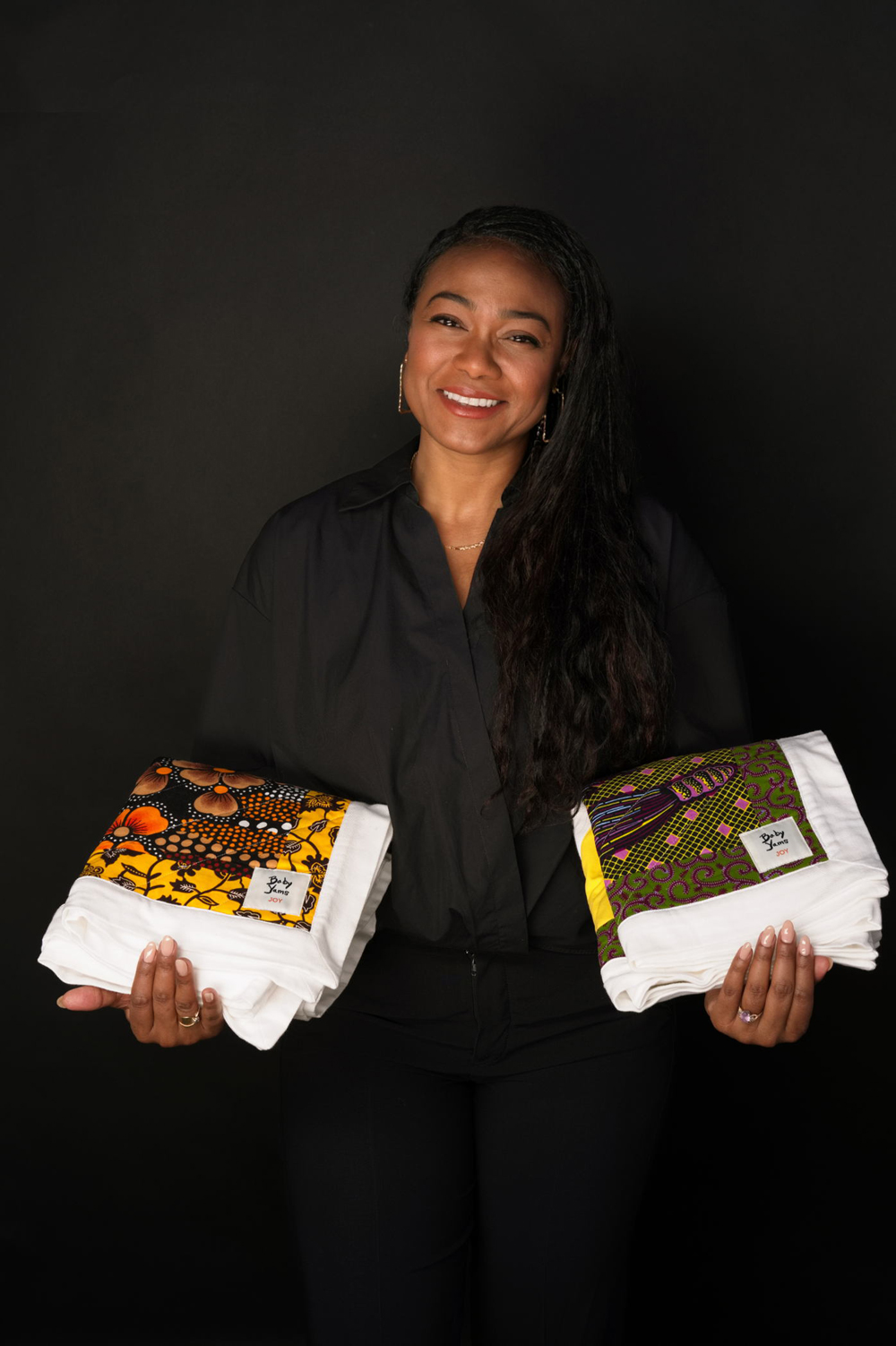
Baby Yams donates a portion of its proceeds for grants and scholarships for Black and Indigenous midwives and doulas who are caring for families properly. And we need to invest in new systems that support them and their work. The quilts use iconic West African fabrics mixed with solid colors, fusing old traditions to make something new, beautiful, and long lasting.
Through the Baby Yams website, www.baby-yams.com, I also write a blog, “The Yam House Diaries,” where I highlight activists, advocates, and the brilliant researchers making change happen. It’s about keeping people informed about what’s happening in the Black Maternal Health space, a resource I wish I had years ago.
Can you talk about how the care you received with your second child was different?
I worked with an incredible midwife who spent real time with me, an hour or more at every visit. When you see an OB-GYN, you’re there for maybe 15 or 20 minutes.
My midwife got to know me, my family and my history. Every time she touched me, she asked for my permission. It was a completely different way of thinking about pregnancy and birth. I was given all the information I needed to make informed decisions. The choices were mine to make, every step of the way.
I planned a home birth. My son went lateral, sideways, so I ended up choosing to go to the hospital to have a c-section, but we had planned for every eventuality beforehand, and my midwife was with me the whole time.
My son was not born in trauma. I did not experience trauma. During my postpartum, she helped me with lactation, helped me heal, and cooked a South African peanut stew for me. It was a completely different type of care.
I had to pay out of pocket $8,000.00 for her care. With my first son, the NICU and everything else that transpired, it cost over $200,000.00 Thankfully, our insurances paid the hospital right away, but I had to fight for two and a half years to get reimbursed for the midwifery care I received. And she kept us safe and healthy.
Things have got to change. We must invest in community midwives and doulas, so families have choices. When people have choices, they choose the people and institutions who treat them the best.
How has becoming a mother influenced the stories you want to tell, including your children’s book?
Stories have the power to create the future. As a mother, I’m obsessed with doing what I can to make the future better for my children. And my kids inspire me so much. That baby who was in the NICU is the boy the book is named after.
Both of my boys’ imaginations are endless. They are so magical, and I wanted to celebrate that.
“Aszi and the Octopus” is part of the Scholastic Rising Voices, Honoring the Richness of Black Stories Collection. I was a Black child who achieved quite a lot at a very young age. Achievement is important, but what’s equally important is that we meet our children where they are.
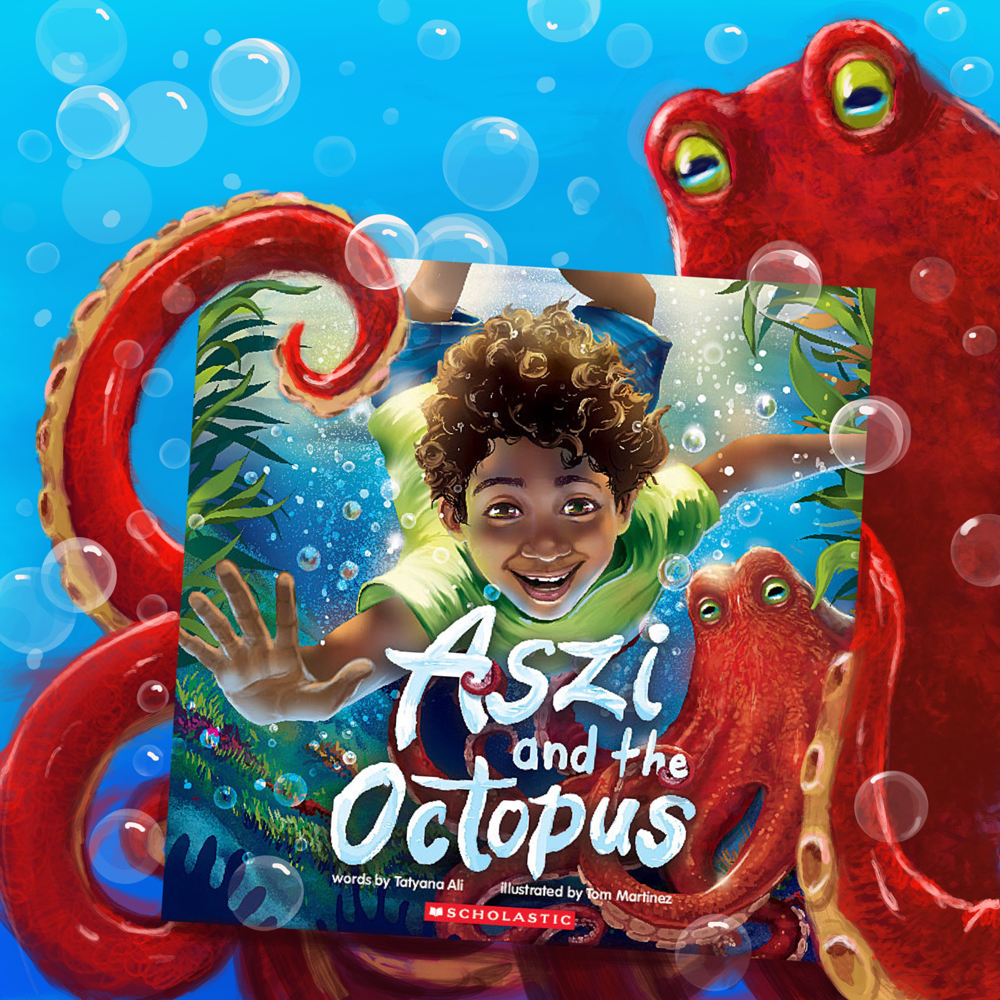
Children, especially children of color, need to play. They need to run wild creatively. That creative place has been the entry point for reading, storytelling, science and math for my kids. I wanted to celebrate that very special place where imagination, sense of self and intuition lives.
We have the power to create the futures we dream of. We just have to keep going. We can’t give up.
