
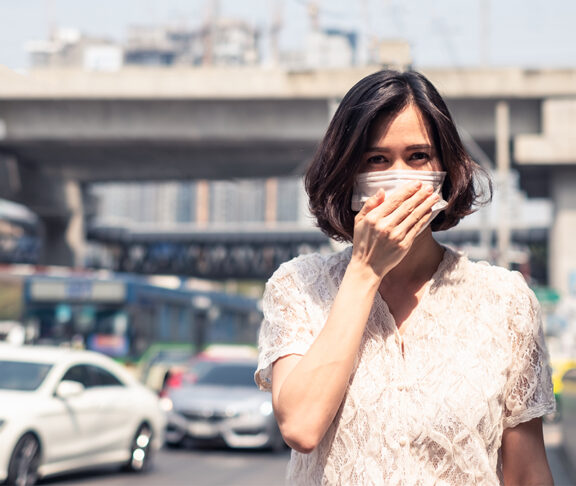
Four in 10 people in the United States live in an area with unhealthy air. Read more about the top tips for protecting against the risks of polluted air.

David G. Hill, M.D.
Chair, Board of Directors, American Lung Association
While there has been considerable progress in improving air quality over the past 50 years, more than 4 in 10 people, including 33.5 million children, live in a community with unhealthy levels of ozone (smog) or particle pollution (soot). Ongoing rising temperatures fueling more wildfires and unhealthy air quality days, along with rollbacks of federal air quality protections, are further threatening the air we breathe.
Air pollution impacts everyone, but especially children, older adults, and individuals living with asthma, COPD, and other lung and health conditions. For these individuals, unhealthy air can be life-threatening.
Here are 10 tips to protect your family, particularly those living with lung disease, from the risks and complications of unhealthy air, while helping to reduce pollution in your home and community.
- Check your daily air pollution forecast. The color-coded forecast — from green (“good”) to maroon (“hazardous”) — can help you understand when air pollution levels are high and potentially dangerous in your community. Sources include local radio and broadcast weather reports, online publications, and airnow.gov.
- Avoid exercising or playing outdoors when pollution levels are high. When pollution levels are high, consider moving your workout to the gym, a shopping mall or other indoor area. For children, limit the amount of time they spend outdoors. Even when the air quality forecast is green (or good) avoid exercising near high-traffic areas to protect yourself from car and truck pollution.
- Use less energy in your home. If your home’s electricity comes from a power plant that burns coal or gas, generating that electricity creates air pollution. By reducing energy use, you can help improve air quality, curb greenhouse gas emissions, encourage energy independence, and save money. Check out the U.S. Environmental Protection Agency’s easy tips for conserving energy at home.
- Encourage your child’s school to reduce exposure to school bus emissions. To keep exhaust levels down, schools should not allow buses to idle outside of their buildings, especially near entryways where children and parents gather. Many school systems are using the EPA’s Clean School Bus Program to replace diesel buses with zero emissions vehicles.
- Consider alternative transportation. Walk, bike, or carpool. Combine trips. Use buses, subways, light rail systems, commuter trains, or other car alternatives to help limit air pollution.
- Don’t burn wood or trash. Burning firewood and trash are among the major sources of particle pollution in many parts of the country.
- Use hand-powered or electric lawn care equipment. Older lawnmowers and leaf or snow blowers emit particle pollution into the air. Newer, energy-saving equipment minimizes particle emissions.
- Be ready for disasters that impact air quality, like wildfires. Learn how to prepare for and protect yourself from wildfire smoke, extreme heat and cold, storms, and other disasters that can impact air quality and your ability to breathe.
- Protect your indoor air quality. We spend 90% of our time indoors, and yet, indoor air can be two-to-five times more polluted than outdoor air. To protect your health indoors, it’s important to identify and minimize the sources of air pollution and to regularly ventilate your home. Window and exhaust fans and air cleaners can help.
- Raise your voice. Recent rollbacks of pollution safeguards have put air quality and health at risk. It’s more important than ever to advocate for strong policies and guidelines that limit pollution from homes, businesses, cars, power plants, and other sources. Action is needed at every level — in your home town and at the state and federal levels. Clean air is everyone’s responsibility.
Our air is fragile. As climate change fuels drastic conditions — from hot, dry temperatures causing wildfires and increased particle pollution to greater rainfall and more severe storms — it is essential that each of us understand the causes and consequences of unhealthy air. Our ability to breathe depends on it.
