

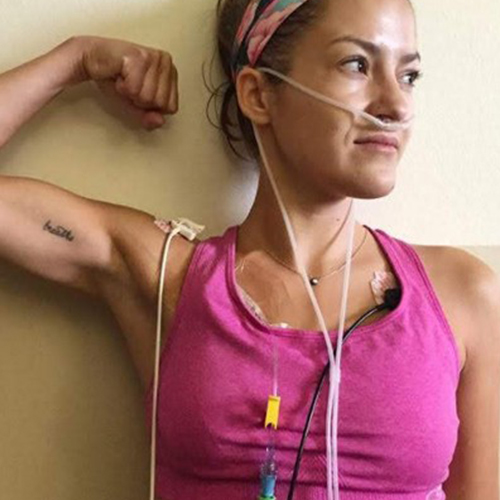
Caleigh Haber
Creator, Fight2Breathe; cystic fibrosis advocate
I was 19 years old when I was expected to be the loudest voice in the room.
When you grow up with a rare genetic lung disease, your specialist isn’t just a physician. They’re a fixture of your childhood, someone who sits across from you more consistently than most family members. You learn their handwriting on prescription pads. You learn to trust without questioning. It isn’t something you choose. It’s simply what you’re taught.
But it isn’t just your doctors you’re taught to rely on. It’s your parents, your caregivers, the entire structure built around you, each of them making decisions on your behalf, translating the medical world into something more manageable. As a child with a chronic illness, you’re raised to believe this is simply how the system works. That blind trust isn’t just normal. It’s necessary to maintain the adherence that managing a serious illness demands of you.
And then, almost overnight, everything shifts.
Taking accountability of care
The transition from pediatric to adult care is jarring in ways nobody prepares you for. One day, your parents are beside you at every appointment. The next, clinicians are looking past them, focusing on you, expecting answers you’ve never been asked to give before. The weight of managing your health, your appointments, your decisions, your future lands on your shoulders all at once, precisely when your body feels least equipped to carry it. The pressure was immense. The responsibility, disorienting. And the grief of losing the structure that had held you upright your entire life is something nobody warns you about.
So many of us reach this crossroads — not just patients, but anyone who has ever been handed a decision that felt too heavy to hold alone. For those of us living with chronic illness, it arrives in a very particular way: in rooms that smell like antiseptic, wrapped in medical jargon, with your life sitting on the table between you and the doctor.
The question underneath every appointment stops being “what do the experts think?” and slowly, painfully, becomes “what do I think?” Learning to answer that question is not a moment. It is a process. One that looks different for every single person walking it.
A life-saving decision
After my second double lung transplant, I found myself in and out of emergency rooms, my body breaking down faster than we could keep up. Pericardial effusions, fluid accumulating around my heart and crushing it, had sent me into emergency open-heart surgery. Twice. And each time, it returned quicker than the last.
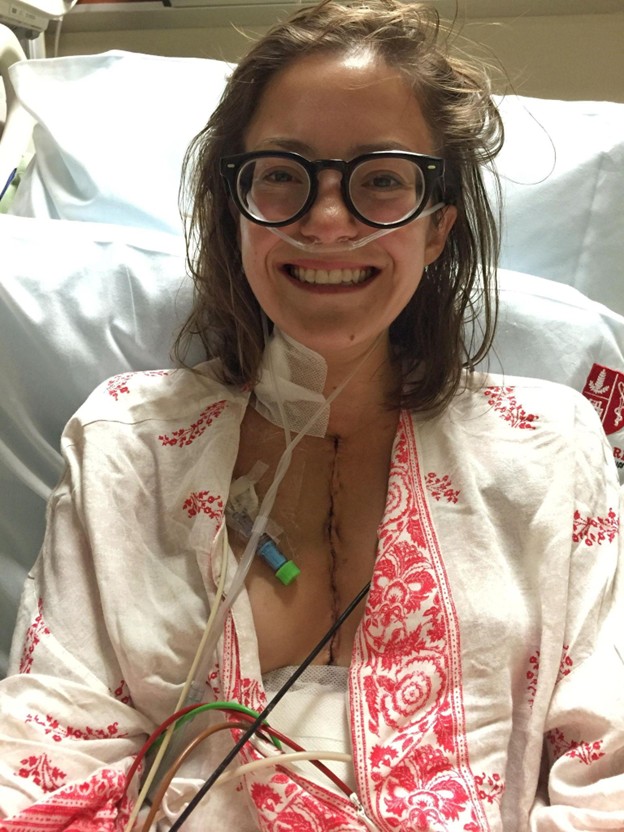
Three specialists. Three different opinions. My family, exhausted and frightened, hoped I’d choose the least invasive path. I understood why. They had slept in hospital chairs for a decade by this point. They had watched me disappear and come back, more times than any of us wanted to count. The weight of what another brutal surgery would ask of them was not lost on me.
And yet, something in me already knew what I had to do.
What followed was one of the hardest decisions I have ever made, not because the medical choice was unclear to me but because of what it would ask of everyone I loved. I chose the most invasive option. Not because I wasn’t afraid. Not because the other voices in the room didn’t matter to me. But because I had done the research, asked the harder questions, and sat alone long enough with the options to know which one my body was telling me to choose. For the first time, I made a decision that went against what the people who loved me most believed was right. It felt nearly impossible, but I trusted myself. And that changed everything.
Trust your voice
That decision didn’t just change my health. It changed who I am.
I now work as a patient professional, traveling the world, advocating not just for myself but for entire communities of people navigating systems that were not built with their voice in mind. I am a wife. A dog mom. A person with a life that, at one point, felt entirely out of reach.

The lesson I carry into every room, every policy conversation, every hospital consult, and every community I serve is this: Your voice is not a privilege you earn when you get well enough. It is the very thing that gets you there.
The system will ask for your trust. Give it wisely. Ask the hard questions. Do the research. And when every voice in the room disagrees with your gut. Remember that you are the one who lives with the outcome.
That is not a burden. That is your power.
