Immunologist and science communicator Morgan McSweeney, better known online as Dr. Noc, explains why the biggest challenge in infectious disease today isn’t biology, it’s the information environment surrounding it.
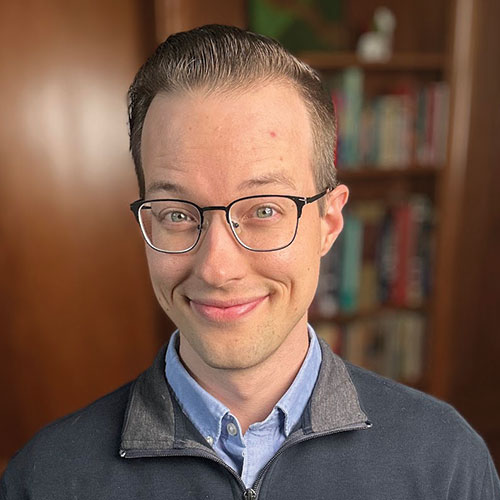
Morgan McSweeney
Ph.D. Scientist, @dr.noc
How do you think the infectious disease landscape has evolved over the past decade?
The biggest change over the past decade has had little to do with viruses, bacteria, or biology itself. It has been the information environment surrounding infectious diseases and health more broadly.
Health claims now move through algorithm-driven platforms that reward confidence, emotional resonance, and narrative simplicity, regardless of accuracy. Claims about vaccines, “protocols,” and treatments routinely reach millions of people before careful explanations or corrections have a chance to catch up. These systems are optimized for attention rather than truth.
At the same time, scientific capacity has advanced at a remarkable speed. We can sequence pathogens quickly, develop countermeasures faster than ever, and monitor outbreaks with unprecedented precision.
The friction point now sits between evidence and trust. When amplified misinformation hardens into identity or ideology, it can distort decision-making all the way up the chain, including to the top of federal institutions meant to safeguard public health. The challenge today is less about generating better evidence and more about ensuring that it survives the media information ecosystem intact on its way to informing policy recommendations.
What misconceptions about infectious diseases do you encounter most often in your work?
One of the most common misconceptions is that infectious disease risk is binary. A virus is either “mortally dangerous” or “harmless.” A treatment or vaccine is either “effective” or “not effective.”
In the real world of science, most conclusions live in gradients. You care about reducing risk, even if you cannot eliminate it entirely. When people expect perfect protection or perfect safety for any medical intervention or device, anything short of that can feel like failure or deception, even when outcomes are meaningfully improved and the benefits outweigh the risks.
Another misconception is that skepticism alone equals critical thinking. Questioning claims is healthy — and a part of science — but without understanding how evidence is generated, compared, and weighed, skepticism can drift into baseless contrarianism. That can leave people feeling confident while amplifying narratives that sound scientific but fall apart under scrutiny.
One helpful habit is to pause when encountering a health claim and ask: Does this affirm something I hope or fear to be true? That question alone can often help reveal how your emotions may be subtly shaping your beliefs.
What guidance do you offer people who feel uncertain or overwhelmed when making health decisions related to infectious disease prevention?
One thing that helps is reducing the self-imposed pressure to be “optimal.” Instead of asking, “Is this the best possible strategy?” it is often more useful to ask, “Does this meaningfully reduce risk for my family or me, and is it worth the attention and effort it costs me?”
That framing can remove a lot of unnecessary stress. Many prevention strategies can be effective without requiring perfection. They rely on consistency and layering small reductions in risk that add up over time.
Feeling overwhelmed is often a sign that the information environment is noisy, not that you are failing at health.
Why does prevention continue to play such a central role in protecting individuals and communities from infectious diseases?
Prevention works upstream, where effect sizes are largest and costs are lowest. That is why factors like routine vaccines, clean water, improvements in nutrition and food security, reduced overcrowding, better housing, and basic infection control have saved more lives than almost any downstream medical intervention.
Once an infection is widespread, responses happen under time pressure, clinical strain, and political heat. Prevention avoids those bottlenecks while protecting individuals and buffering shared public goods like hospitals and schools. One important note: Unlike a treatment for someone who is already sick, most preventive measures are given to generally healthy individuals, which demands a much higher bar for safety. That nuance is carefully considered by regulatory experts when weighing risks and benefits before making broad recommendations.
Prevention is also one of the few areas in medicine where individual choices genuinely scale to community-level outcomes. That makes it powerful, but also easy to undervalue. The challenge is that when health measures for prevention work well, nothing dramatic happens, and that invisibility can make the benefits easy to overlook.
What strategies do you find most effective for helping people recognize credible health information online?
I encourage people to have a “confidence meter.” Some of the most misleading information online is delivered with great confidence. When you encounter a remarkably confident claim, it helps to think about what that claim actually commits to.
Credible health claims tend to be specific about outcomes, clear about limitations, and comfortable with uncertainty. They explain not just what the conclusion is, but how it was reached, and they earn authority through transparency rather than tone, contrarianism, or aesthetics.
Another helpful check is to notice whether the information introduces friction. In this case, that’s a good thing. Credible sources often slow you down rather than rush you toward a conclusion. They include caveats, context, and uncertainty that make the message slightly harder to consume. That is one reason credible health information often struggles to perform well on social media, while misleading claims gain traction by moving fast toward certainty and appealing to emotion.
Another signal to look out for is where the claim lives. Information that appears consistently across independent outlets, professional societies, or clinical guidelines tends to be more reliable than claims concentrated in a single influencer ecosystem.
What gives you optimism about the future of infectious disease prevention and public health?
What gives me optimism is that people are paying attention in a more durable way.
There is a growing appetite for slower, clearer explanations and for guidance that respects people’s intelligence rather than trying to scare, impress, or overwhelm them. I see this in the kinds of questions people ask me now. They are less about shortcuts and more about tradeoffs, uncertainty, and real-world decision-making.
We have extraordinary scientific tools that improve every year. Paired with better communication and a clearer understanding of how people make choices, the future of infectious disease prevention has the potential to be far more effective than the past.
