

New treatments that safely prevent or delay Alzheimer’s are a public health priority. Finding treatments will require healthy participants with genetic risk, family history, and biomarkers of early disease to partner with researchers in clinical trials.
We spoke with Sarah Walter, a researcher at the University of Southern California, and two research participants and community advocates, Nancy Meserve and Carol Turner. They work together as part of the Alzheimer’s Clinical Trials Consortium Research Partnership Alliance, providing key insights from lived experience directly to Alzheimer’s researchers across every stage of research. Their goal is that research will be an option for everyone, echoing patient movements that call for “Nothing about us without us.”
Ms. Meserve and Ms. Turner both completed four years in the AHEAD study. The AHEAD study is a clinical trial testing whether Leqembi (lecanemab) can delay or prevent Alzheimer’s in people who have amyloid in their brain but no changes in memory or thinking. Leqembi is approved by the FDA for people with Alzheimer’s disease.
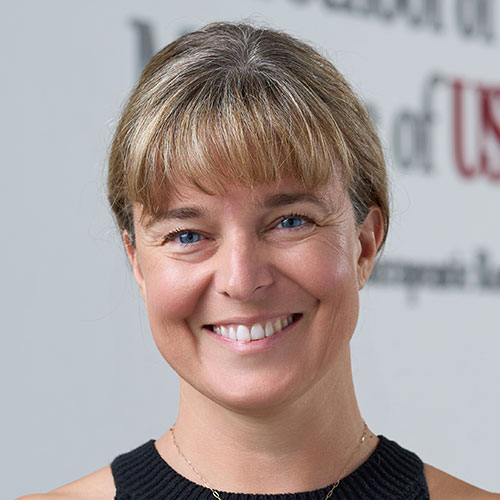
Sarah Walter, M.Sc.
Researcher, USC Epstein Family Alzheimer’s Therapeutic Research Institute (ATRI)
Nancy Meserve
Patient Advocate; Member, Alzheimer’s Clinical Trial Consortium (ACTC) Research Partnership Alliance
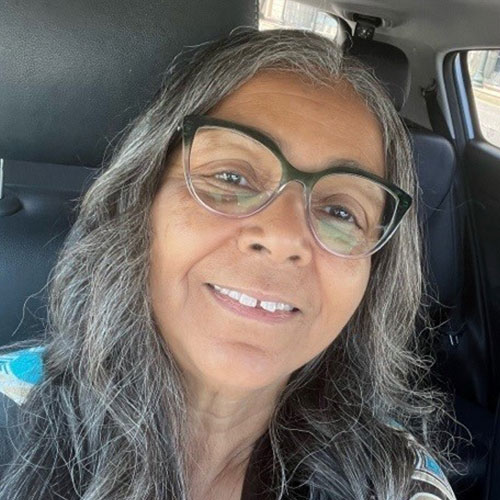
Carol Turner
Patient Advocate; Member, Alzheimer’s Clinical Trial Consortium (ACTC) Research Partnership Alliance
What provides hope right now in Alzheimer’s research?
Sarah Walter: Our community partners are helping to write a new story about Alzheimer’s. Thanks to them, we now have ways of measuring changes in the brain using blood and brain scans. Our studies target the biology of Alzheimer’s before symptoms occur, giving us great hope for a future without stigma and fear of this disease.

Why did you sign up to be in a clinical trial for Alzheimer’s?
Nancy Meserve: Like many with a family history of Alzheimer’s, I didn’t want to think about it until I was 80. But learning that two copies of APOE4 gave me a high likelihood of a diagnosis 10 years before that made me realize that participating in clinical trials is the best way to delay or prevent this disease — if not for me, then for those who carry APOE4 or other risks.
Carol Turner: During my mom’s results visit with her doctor, my brother and I had the opportunity to join a new Alzheimer’s preventative study. Since it’s genetically in our family, honestly, we both knew it was a no-brainer. I started the process in 2021. It was so important for me to help educate my African American community, being underrepresented, to ensure enough data is gathered to make for an even playing field toward the cure of this disease.
What are the first steps involved in clinical trials?
NM: Screening is the first step, which gives you time to ask questions and learn about PET scans, MRIs, the drug’s purpose, and your role, with in-depth conversations before deciding to sign the informed consent. My study team treated me as a valued partner from the first day, and allowed me to view AHEAD as part of my life, along with my husband, three grandchildren, travel, and outside interests.
CT: The first steps of the study began with getting an amyloid PET scan. It showed amyloid plaque in my brain, and that’s when everything became real for me. Over the next four years, I went through infusions, MRIs, memory tests, blood work, and regular checkups. Being part of this study opened my eyes to how much people don’t know, especially in my African American community, where Alzheimer’s is one of the leading causes of death. That’s why I’ve made it a point to share what I’ve learned through panel discussions and conversations with those who can help make a difference in slowing down or one day eliminating this disease. Now, at the end of my 4-year commitment, I have agreed to continue in the 2-year unblinded extension phase, receiving the preventative medication Lecanemab.
When people volunteer to test new medications, how is their safety protected?
SW: Our top priority is participant safety, choice, and transparency. Highly-trained specialists and clinicians work across all sites to safeguard with detailed protocols for monitoring safety and treating any adverse events. An independent medical board reviews data to identify any unexpected side effects. If something is found that could impact the participant’s health, the participant is told promptly, and the study treatment may be paused or stopped.
How can people find a study that is a good fit for them?
SW: You have the power to decide what study is best for you. Alzheimers.gov is a federal resource that connects individuals with ongoing research opportunities, including online and in-person research. You can also contact trialmatch.alz.org or call (855) 216-0160. Read more about the Epstein Family Alzheimer’s Therapeutic Research Institute, a global leader building collaborations for landmark clinical trials, at atri.usc.edu.
