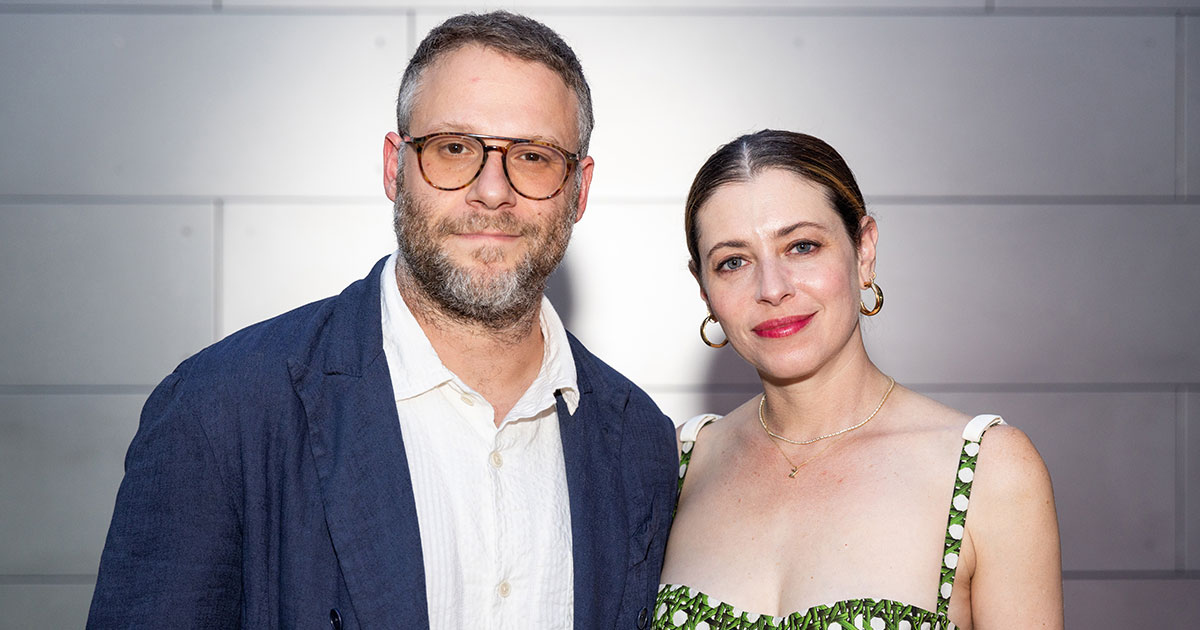
Celebrity couple and Hilarity for Charity (HFC) co-founders Seth Rogen and Lauren Miller Rogen talk about Lauren’s mother’s early-onset Alzheimer’s and what families dealing with the disease face every day.
What did your mom’s experience with Alzheimer’s lead you to realize, and how did that shape HFC?
Lauren Miller Rogen: Seth and I founded HFC after my mom, Adele, was diagnosed with early-onset Alzheimer’s at just 55. We were in our 20s and felt completely alone. No one in our community was talking about Alzheimer’s, brain health, or what it truly means to be a caregiver. We kept thinking, “Is there a manual for this?”
It turns out, no, there isn’t. Caring for my mom — and each other — made a few hard truths clear: Alzheimer’s is brutal, caregiving is wildly expensive, and for young families suddenly facing this, resources were almost nonexistent.
So, we decided to change that. We brought together our friends and community for our very first variety show to start the conversation and build something we wished we had. That’s how HFC began. Today, we provide care and support for families, activate the next generation of Alzheimer’s advocates, and drive progress in brain health research and education.
Through your work with HFC, what have you learned to be the biggest gaps in support for families affected by Alzheimer’s?
LMR: The biggest gaps are financial and emotional support for caregivers. Families are often expected to manage this with very little guidance, and the cost of care can be overwhelming. Our own family was stunned by the cost of providing quality care for my mom. While we were fortunate to have the resources to secure caregivers for my mom, we recognized early on that for most families, that support is simply out of reach.
That’s why HFC created our respite care grant program, which has provided more than 550,000 hours of free, professional in-home care so family caregivers can rest, take care of themselves, or simply manage daily life. Recently, we’ve also expanded support to include adult day center care. Caring for the caregiver is essential, and we hope HFC can be a steady, supportive resource throughout a family’s experience with the disease. Demand for respite care continues to grow, and all gifts help us ensure no caregiver has to face this journey alone.
Seth Rogen: There’s also a major gap in accessible, culturally competent care and education. Not everyone has equal access to information, support systems, or even a diagnosis, and that’s something we’ve been working to change, especially in communities that have historically been underserved.
How do you think storytelling and culture can shift the way people understand and talk about Alzheimer’s and caregiving?
SR: As storytellers, we’ve always believed in the power of story to shift how people see and talk about Alzheimer’s and caregiving. When we started HFC, much of the conversation felt clinical or academic, while families were actually craving real, human stories — the kind that show the hard parts, the love, and, yes, even the humor that exists alongside it.
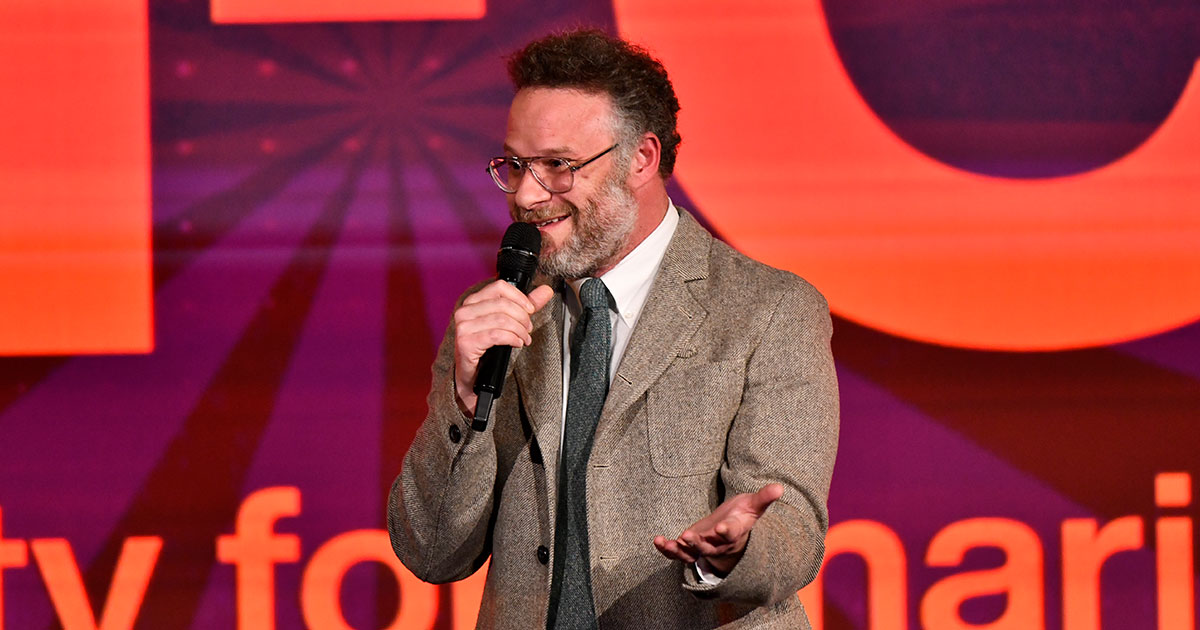
LMR: When people see themselves reflected, it reduces isolation and helps break down fear and stigma. Culture can take that even further, whether through film, comedy, podcasts, or social media, by meeting people where they already are.
For Seth and me, sharing our own experience — including projects like our documentary “Taking Care” and the soon-to-be-released “Tangles,” the animated movie we produced that’s based on a graphic novel about a young woman caring for her mother with Alzheimer’s — is about opening that door. It helps normalize caregiving and reinforces that Alzheimer’s is not just a private struggle, but a public health issue affecting families of all ages.
What do you wish more people truly understood about the reality of living with or caring for someone with Alzheimer’s?
LMR: I wish more people understood how all-consuming it is. Alzheimer’s doesn’t just affect memory; it impacts every part of a person’s identity, and it fundamentally changes the dynamic of a relationship.
For caregivers, it’s a constant responsibility that can be emotionally, physically, and financially exhausting. The grief is ongoing. You’re always adjusting to new versions of the person you love. At the same time, there are still moments of real connection and love that feel incredibly meaningful. Caring for someone with Alzheimer’s is layered and complex, often in ways people don’t always expect.
From what you’ve seen, what approaches seem to help caregivers better connect with their loved ones and reduce frustration?
LMR: One of the most important shifts is learning to meet people where they are, rather than trying to correct them or bring them into your version of reality. That alone can ease a lot of frustration for both the caregiver and the person living with the disease.
Communication also plays a big role. Simple language, eye contact, and patience go a long way. Over time, nonverbal connections become even more important. Things like music, touch, or shared activities can be incredibly meaningful.
SR: Honestly, support for the caregivers themselves is key. When caregivers have access to respite care, education, and community, they’re better equipped to show up with patience and compassion.
How do you get people to care about Alzheimer’s before it becomes part of their own story?
LMR: Our goal is to get people thinking about brain health the same way they think about heart health — something you take care of proactively, not reactively. Right now, 6.7 million people are living with Alzheimer’s and related dementias, and that number is expected to double by 2050. What many people don’t realize is that the disease actually begins in the brain 20 to 30 years before symptoms appear. In my mom’s case, it likely started when she was in her 20s.
SR: The good news is that 45% of cases may be preventable through lifestyle choices. Things like quality sleep, regular exercise, a brain-healthy diet like the Mediterranean or MIND diets, staying socially and cognitively engaged, and managing stress all play a role. We like to say it’s never too early (or too late) to start living a brain-healthy life, and we encourage people to learn more at maintainmybrain.com.
