Adrianne Lentine, a wellness creator caring for her mother through Alzheimer’s, opens up about prevention, grief, and what daily caregiving teaches you.
How has watching your mom go through Alzheimer’s shaped the way you think about your own health?
Watching my mom go through Alzheimer’s for the last six years changed everything for me. It took prevention out of the abstract and made it deeply personal and urgent. I used to think of health in terms of how you feel today, but now I think in decades. I think about what I’m doing now that could impact my brain, my independence, and my ability to be present for my husband and kids later.
It’s made me much more proactive, not out of fear, but out of a deep desire to give myself the best chance at a different outcome. Once you see this up close, the heartbreak and the drastic change it brings for everyone involved, you realize you’re willing to do whatever it takes to make sure that’s not your story, too.
What do you think people most often get wrong about preventing Alzheimer’s?
I think a lot of people feel like Alzheimer’s is either genetic or inevitable, and that’s not always the full picture. While we can’t control everything, there’s so much more influence than people realize when it comes to metabolic health, inflammation, sleep, stress, and daily habits.
Genetics absolutely do play a role, but I think people underestimate how much small, consistent changes add up over time. It’s not about being perfect. It’s about building a lifestyle that supports your brain little by little, day after day. The changes can feel overwhelming at first, but over time, they truly become your lifestyle, and one that not only supports your future but also helps you feel better right now. It really can be a win-win.
What has been the hardest emotional part of being a caregiver to your mom?
One of the hardest things is realizing that you start grieving long before the person is physically gone. Whether you call it anticipatory grief or ambiguous loss, it’s not one moment; it’s a thousand small losses. Conversations change. Roles reverse. The person you’ve always known slowly becomes someone different, and you’re constantly adjusting to that.
It also gives you a much deeper empathy for caregivers. Until you’re in it, it’s hard to fully understand the emotional weight they carry every single day.
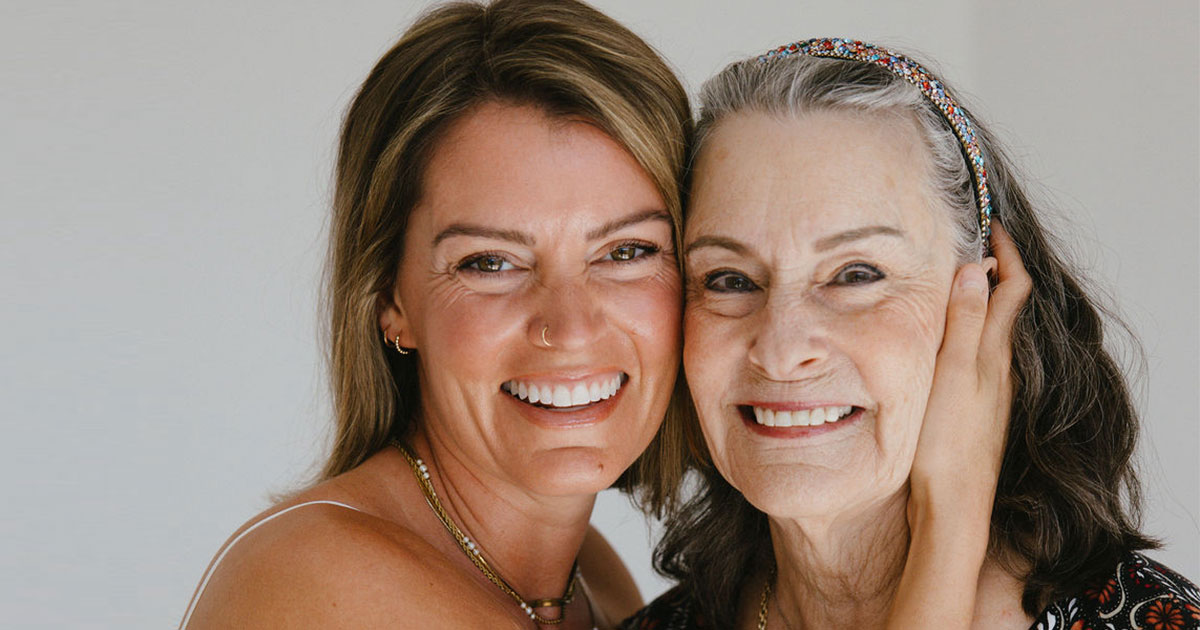
How do you balance focusing on prevention with the emotional side of watching your mom decline?
It’s a constant balance. There are days when I feel very focused and empowered by the things I can control, and other days when the emotional side takes over. I’ve had to learn that both can exist at the same time. I can care deeply about prevention and still feel sadness, frustration, or grief.
For me, focusing on prevention gives me a sense of purpose in something that can otherwise feel very out of my control, but I also try to stay present and not let future fears take away from the time I have right now. Finding purpose and intentionally looking for the good and beautiful moments within this journey has helped so much — not only for me, but for my mom, too.
How has caregiving changed the way you approach your own self-care?
Caring for someone else really highlights how important it is to take care of yourself, too. You see firsthand what happens when health declines, and it changes how you view your own habits and priorities. At the same time, caregiving can be physically and emotionally draining, which makes self-care even more important, but also more challenging.
One struggle I often have is the balancing act of spending the day caring for my mom and then switching back into mom mode at home. Both roles are so important. I think there’s a deep connection in realizing that taking care of your own health isn’t selfish. It’s actually one of the most important things you can do for the people you love.
