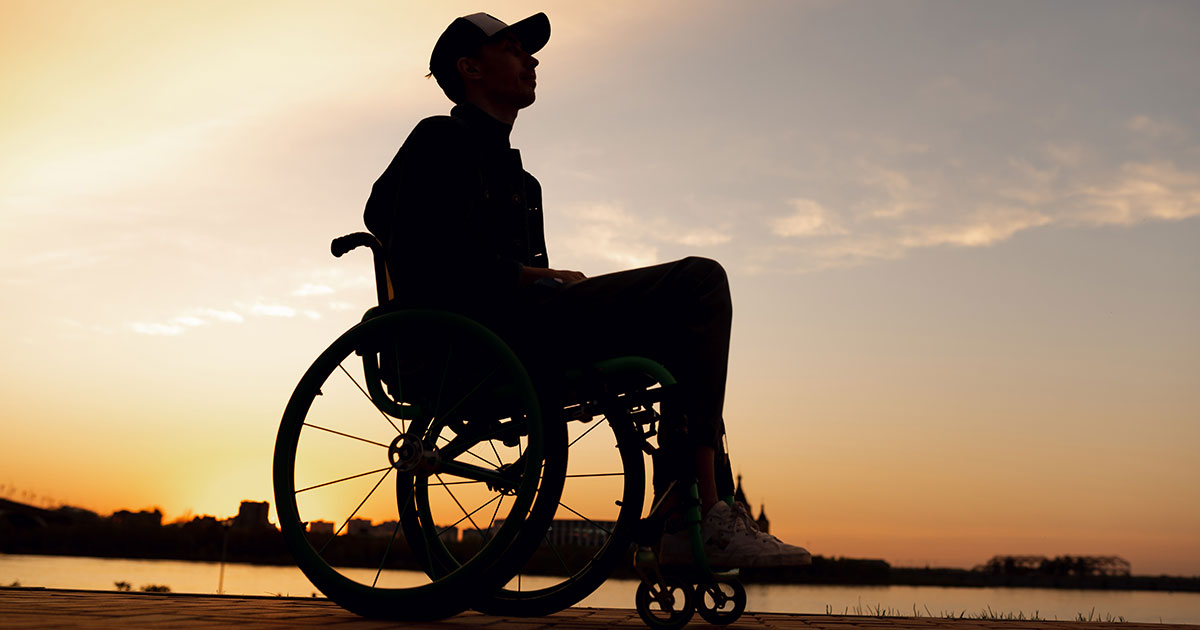
Identity forged in uniform can feel unbreakable — until loss forces us to discover what truly makes us whole.
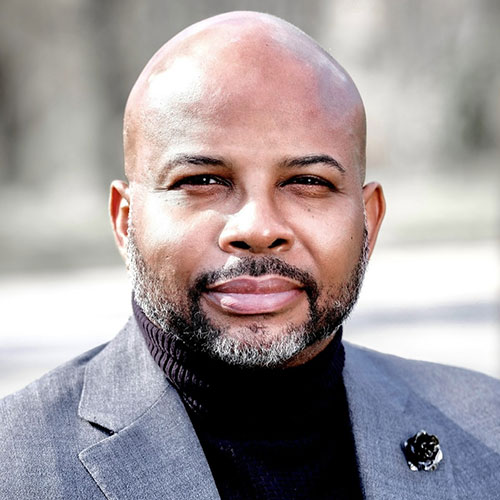
Dr. Sherman Gillums, Jr.
Senior Director of Public Policy and Advocacy, Christopher & Dana Reeve Foundation
No one joins the military already feeling complete. We arrive seeking purpose and identity. Many of us were barely adults, hungry for the transformative power promised in recruiting ads. Whether a soldier, sailor, airman, or Marine, the first time we stood at attention in uniform felt like discovering a missing piece of our identity — finally whole, finally seen.
But there’s a difference between discovering who you are and uncovering what was always deep inside you.
After the mission ends
Transitioning from Marine to a person living with a disability became the most jarring form of identity loss I’d ever experienced. More sobering than boot camp, and more disorienting than first parenthood. Many dream of running through mud while being screamed at by a drill instructor or cradling their first newborn. No one fantasizes about trading dress blues for a wheelchair. The mere possibility haunts those who deploy and the families who anxiously await their safe return.
I lived that nightmare when a doctor’s words crushed all hope: “You’ll never walk again.” I felt not just a hole in my sense of self, but a yawning chasm. Without the uniform, that hard-earned symbol of everything I’d fought to become, disappeared, and with it, so did the Marine who had emerged from Parris Island in 1990.
Years of darkness passed before a truth came into view: The raw essence of who I was did not come from the military. It had always lived in my spirit, powering me through physical therapy, graduate school, and parenthood. Nurses replaced drill instructors. The hospital ward became my squad bay. The wheelchair became my weapon in a fight for dignity.
Rebuilding from within
What remained invisible to passing eyes was the person I’d become only after being stripped of the uniform. True completion arrived in the sacred space I shared at hospital bedsides with broken warriors who had left parts of themselves in distant lands. They saw themselves reflected in my eyes, whole again, through our connection.
Connecting with fellow survivors transcended every boundary and my fiercely guarded identity as a twelve-year Marine. But first came the stripping away of everything external, the painful examination of what remained when all medals and rank were removed. This raw essence beneath layers of pretense called me to a truth: purpose matters more than status, and our impact on others’ lives outweighs any award or achievement.
In the end, the wheels had indeed become the pathway to uncovering who I was meant to be — not standing tall in dress blues, but rather sitting eye-to-eye with those whom society too often looks past and finding in their experiences my own undefeated spirit.
Today, the Reeve Foundation and its National Paralysis Resource Center help build that same spirit for many through resources, advocacy, and community. This includes transformative guidance and services, including specific support for military and veterans, no matter where, when, or how they become paralyzed. This is how we best ensure no one is left behind and no one is left unseen.
