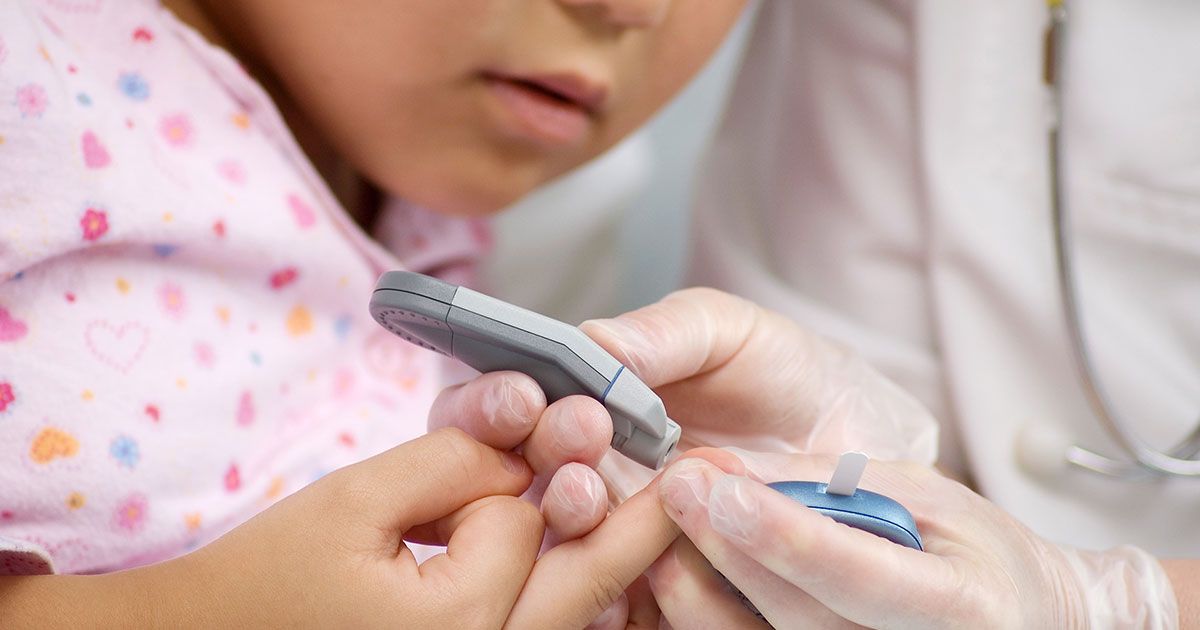
Early screening for type 1 diabetes can help at-risk individuals detect the disease sooner, delay progression, and prevent life-threatening complications.
Type 1 diabetes is an autoimmune disease where the body attacks the beta cells in the pancreas that produce insulin, ultimately causing the body to stop producing insulin. There is a common misconception that only children develop type 1 diabetes, but it can develop at any age. There is a strong hereditary component to developing type 1 diabetes.
If you and/or your child(ren) have a family history of autoimmune disease, you should talk to your doctor about being screened for type 1 diabetes and to understand your risk of developing it. There are two important reasons for this:
- It’s more likely that type 1 diabetes will be detected early, before significant complications develop that can result in hospitalization or even be life-threatening.
- There are new treatments available that can delay the onset and/or progression of type 1 diabetes.
If you are at high risk for developing type 1 diabetes, it also allows you to become familiar with the symptoms so that you know what to watch for.

The type 1 diabetes screening process
Screening is done through a blood test to measure for antibodies associated with type 1 diabetes. If your antibody test is negative, your doctor may want to test you again in the future. If your antibody test is positive, it does not necessarily mean that you currently have type 1 diabetes or will develop it in the future, but it does indicate a higher risk of developing it. With a positive test, your doctor may order additional testing to determine the next steps.
Being diagnosed with type 1 diabetes can be overwhelming and scary, but with early screening and monitoring if you’re at risk, you may be able to slow its progression and avoid serious, life-threatening complications. Learn more about type 1 diabetes and screening at diabetes.org/Type1.
