
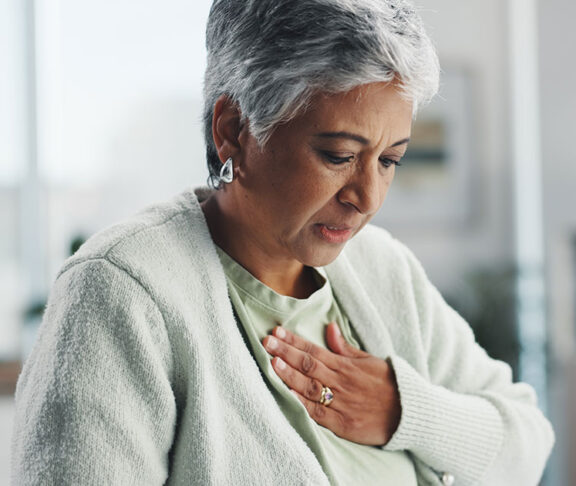
Heartburn and heart attack symptoms can feel remarkably similar, making it critical to know when to seek immediate care.
Chest pain is one of the most alarming symptoms a person can experience. One reason is that heartburn and heart attack symptoms can feel very similar. According to the American Heart Association, heartburn has nothing to do with your heart, but heartburn symptoms can feel like chest pain. If you are not sure whether your symptoms are heartburn or heart-related chest pain, seek medical help right away.
Quick facts
- Heartburn actually has nothing to do with your heart
- Heartburn symptoms can feel like chest pain
- If you are unsure whether symptoms are heartburn or chest pain, seek medical help immediately
What does heartburn have to do with your heart?
Despite its name, heartburn is not related to the heart at all. Heartburn, also called acid reflux or indigestion, is related to the esophagus. However, because the esophagus and the heart are located close to each other in the chest, pain from either one can feel similar. This is why many people mistake heartburn for angina or a heart attack, and vice versa.
What is heartburn?
Heartburn is a common condition caused by stomach acids rising into the esophagus. This can cause chest pain that sometimes moves to the neck, throat, or jaw. While heartburn is usually related to digestion rather than the heart, its symptoms can closely resemble those of a heart attack, making it difficult to tell the difference without medical evaluation.
When in doubt, check it out
The American Heart Association emphasizes that if you are not sure whether your symptoms are heartburn or heart-related, you should seek medical attention right away. A healthcare professional can rule out the most serious possibility first. This is especially important for women, because their heart attack symptoms may not always include chest pain.
Call 911 right away if you notice any of these symptoms
- Uncomfortable pressure, squeezing, fullness, or pain in the center of the chest that lasts more than a few minutes or that goes away and comes back
- Pain or discomfort in one or both arms, the back, neck, jaw, or stomach
- Shortness of breath, with or without chest discomfort
- Other signs such as breaking out in a cold sweat, nausea, or lightheadedness
As with men, women’s most common heart attack symptom is chest pain or discomfort. However, women may have symptoms that are less commonly associated with a heart attack, including anxiety; shortness of breath; upset stomach; pain in the shoulder, back, or arm; and unusual tiredness or weakness.
How to help avoid acid reflux
The American Heart Association lists several steps that may help reduce heartburn:
- Avoid alcohol and cigarettes
- Avoid citrus foods, which can relax the valve between the stomach and esophagus
- If possible, avoid medications that can cause acid reflux, including some pain relievers and asthma medications
- Raise the head of your bed about six inches if you experience heartburn at night
- Do not eat within three hours of bedtime
- Lose weight if recommended by your healthcare professional
- Talk with your healthcare professional about ongoing symptoms
Chest pain should never be ignored. When it comes to heartburn versus a heart attack, it is always better to get checked and know for sure.
