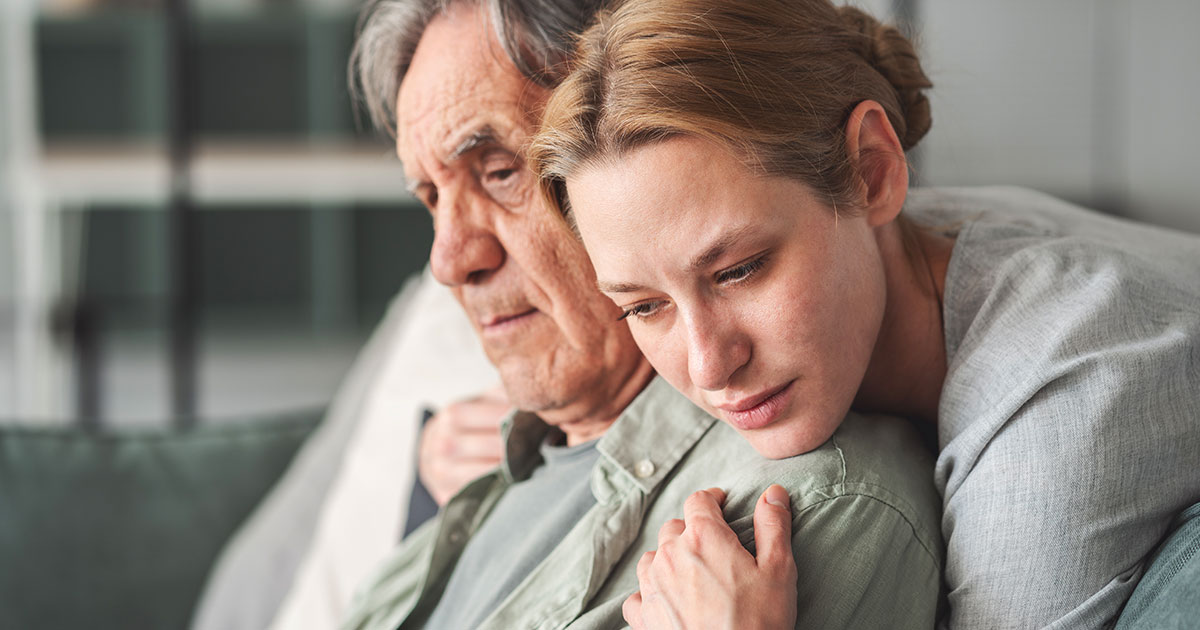

No one should have to navigate their loved one’s mental health challenges alone. Caregivers deserve support, resources, and community to help them care for their loved ones and themselves.

Megan Rochford, LPCC-S
National Director for HelpLine Services, National Alliance on Mental Illness
As a clinical counselor with years of experience working in mental health, I have always known that family support can be a critical part of recovery for people living with serious mental illness.
Yet, it wasn’t until our youngest son was diagnosed with a serious mental illness that I fully understood the level of support families and caregivers need as well.
The unique challenges of mental health caregiving
While the rewards of caring for a loved one with mental illness are tremendous, to be a family caregiver is to embark on a long and demanding journey. As caregivers, we often see someone we love in pain, we’re confronted with confusing systems of care, and we routinely face stigma.
Perhaps the greatest challenge is the feeling that we’re soldiering on alone. Yet, the reality is that millions of Americans are caring for loved ones with serious mental health conditions.
I am so grateful for the families who have shared wisdom with my family, lifting us up on dark days and shining a light on a path forward. Everyone who cares for someone with a mental illness deserves the same support and guidance that my family received.
Family caregivers need relevant resources to help them navigate challenges like finding healthcare, housing, and other supportive services for their loved one. They require guidance on how to prepare for possible crises and navigate the legal and justice systems. They should have support to help manage family dynamics and maintain positive relationships. They must be encouraged and supported in taking care of themselves.
The importance of connecting to community
To be a caregiver is to brave challenge after challenge, practicing resilience and strength with little or no recognition. Caregivers don’t need a reminder to care harder. They need tools, support, and resources that help them care for their loved ones and themselves.
This is something we understand deeply at the National Alliance on Mental Illness (NAMI). NAMI began in 1979 as a small gathering of families looking for answers and treatments for their loved ones and has since evolved into the nation’s largest grassroots mental health organization. Every day, NAMI helps connect individuals and families to much-needed resources and community through peer-led programs, support groups, and free and confidential HelpLine services.
We want every family caregiver to know one thing: You are not alone. Real help and support, grounded in lived experience, are just a call, text, or email away. All of the trained volunteers who staff the NAMI Family Caregiver HelpLine have walked a similar path and understand what it means to care for a loved one with mental illness. From one caregiver to another, we’re here to listen, share what’s helped us, and help people find a way through.To reach the Family Caregiver HelpLine, call 1-800-950-NAMI (6264) and press 4, or text FAMILY to 62640, Monday through Friday, from 10 a.m. to 10 p.m. Eastern time. You can also learn more at nami.org/family.
