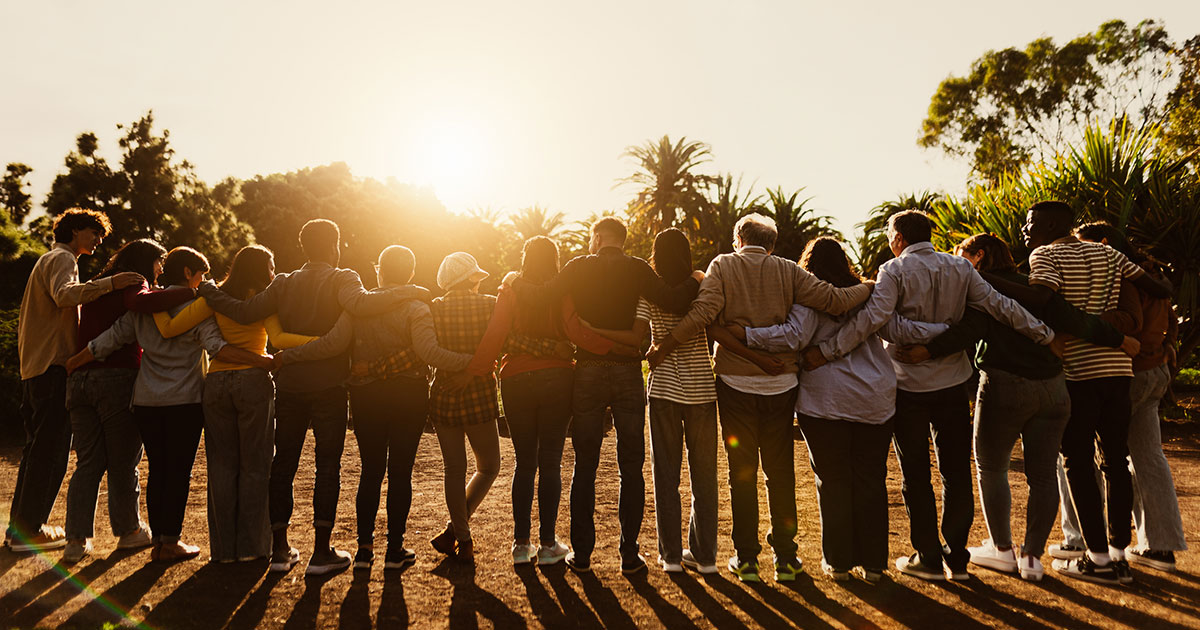
Mental health is not only about treating illness. It is about strengthening relationships and community connections that help people experience more good days, together.

Pierluigi Mancini, Ph.D.
Interim President and CEO, Mental Health America
Founded by Mental Health America in 1949, Mental Health Month reminds us that mental well-being is more than just the absence of illness. It is also rooted in positive relationships, meaningful connections, and supportive communities that enable people to thrive. Mental Health America’s theme for this year’s Mental Health Month, More Good Days, Together, reflects this important fact: Connection is one of the most powerful ways we can protect our mental health.
Human beings are fundamentally social. Strong relationships provide emotional support, make it easier to navigate difficult times, and contribute to a greater sense of belonging and purpose. Research shows that people with strong social connections experience better mental and physical health outcomes, and even longer life expectancy. Conversely, social isolation and loneliness are associated with higher risks of depression, anxiety, suicide, heart disease, and dementia.
A growing public health concern
Unfortunately, modern life can make meaningful connections more difficult. Many people are experiencing fewer close friendships, increased digital isolation, and greater stress related to economic pressures and uncertainty. In recent years, loneliness has emerged as a major public health concern in the United States.
In a landmark advisory, the U.S. Department of Health and Human Services and the U.S. Surgeon General warned that the health risks associated with chronic loneliness can be comparable to smoking up to 15 cigarettes a day. Nearly half of U.S. adults report experiencing measurable levels of loneliness, highlighting the urgent need to strengthen social connections across individuals and communities.
Building connection in everyday life
At the individual level, even small moments of connection can support our mental health. Making plans to catch up with a friend, colleague, or loved one — whether in person or virtually — is a great place to start. Joining a club related to your interests, participating in community events, or volunteering for a cause you care about are other great ways to connect with others.
At the societal level, it is crucial that we create conditions that allow individuals, families, and communities to connect, experience well-being, and have more good days. We know that when workplaces promote psychological safety, schools teach social and emotional skills, and neighborhoods create opportunities for people to engage with one another, the result is healthier individuals and stronger communities. Environments that foster trust, empathy, and belonging make it easier for people to seek help when they need it and to support others who may be struggling.
Equally important is reducing the stigma that still prevents many people from seeking support. Too often, individuals believe they must face emotional challenges alone. Changing that narrative and encouraging open conversations about mental health is essential to ensuring that people feel seen, heard, and supported.
When we strengthen relationships, reduce isolation, and invest in supportive communities, we move closer to a future where more people can truly experience more good days, together.
