


When someone reaches out to 988, the national Suicide & Crisis Lifeline, every second counts.
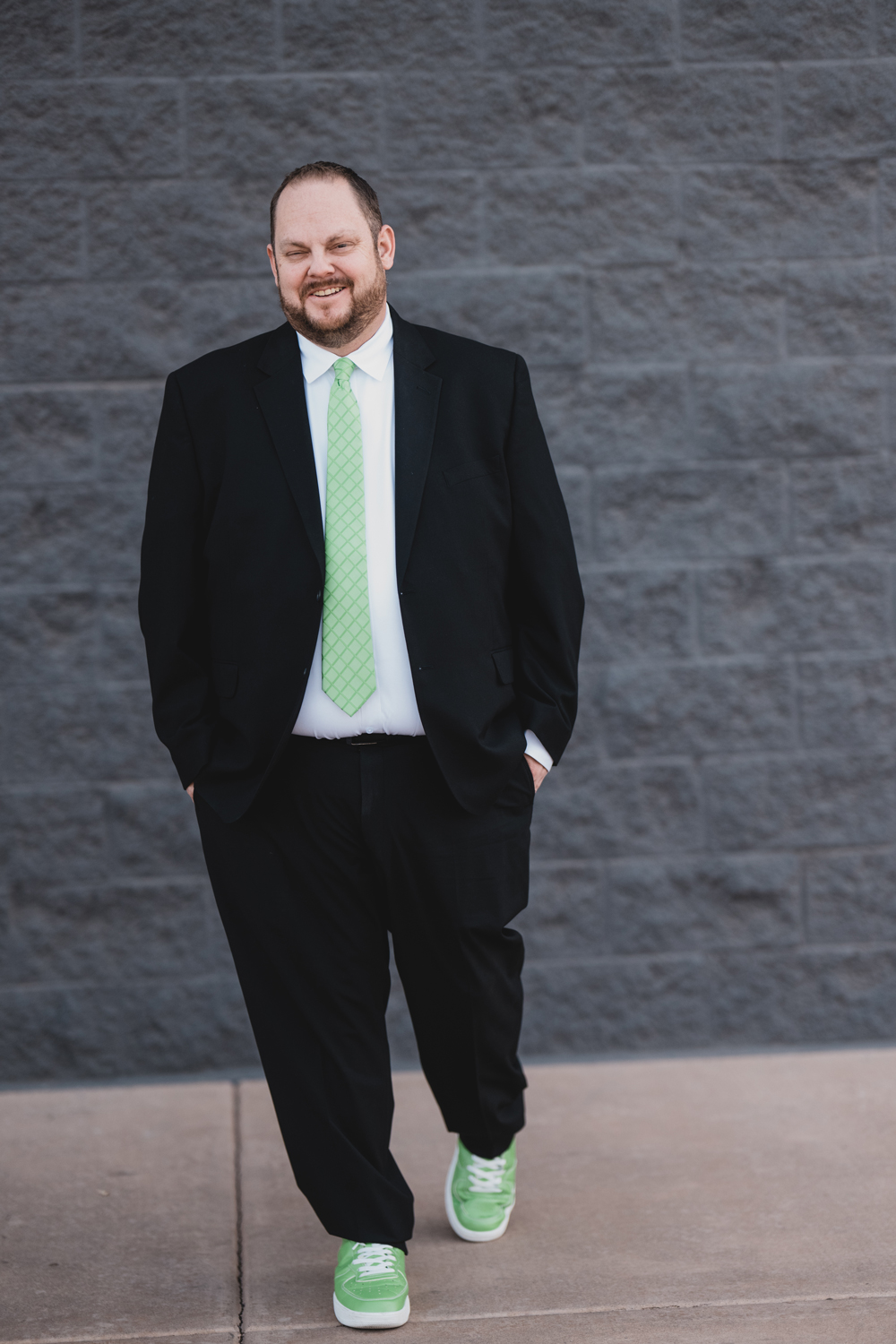
As Justin Chase, CEO of Solari Crisis & Human Services and a licensed social worker, explains: “Every call to 988 is an opportunity and every call is a risk. And if we’re not able to pick up that phone in a timely fashion, the consequences can be dire. Lives can be lost in that moment.”

Redefining what crisis care looks like
Launched nationwide in 2022, 988 represents a major evolution in how the United States responds to mental health crises. Unlike 911, which typically dispatches emergency services, most 988 interactions are resolved in real time through conversation with trained counselors equipped to support individuals and their loved ones.
Chase described the hotline as “likely the greatest creation in helping services of my generation.” He emphasized that crisis is not limited to acute emergencies: “A crisis can be self-defined. It is any life stressor that is too heavy to carry on your own.” People reach out for reasons ranging from loneliness and anxiety to substance use and acute distress — making early access to support critical.
Fulfilling the promise of this transformative service requires more than answering calls.
Today, the system’s biggest gap lies beyond the initial connection. “The value of 988 is restricted to the ability for us to connect people to care in the communities that they reside,” Chase said. Even the most responsive call center cannot succeed if local systems — mobile crisis teams, outpatient care, and stabilization services — are not equipped to meet demand.
Why consistency — and community understanding — matter
Experiences with 988 can vary widely depending on geography. Some states have highly coordinated systems, while others rely on fragmented networks that deliver uneven care. Ensuring a consistent, high-quality response across locations is essential to building trust.
At the same time, crisis care must reflect the communities it serves. From rural and frontier regions to tribal lands, agricultural workers, and veterans, effective response requires local resource connection alongside clinical expertise. Strong systems balance established best practices with local knowledge to ensure care is both reliable and relevant.
A more integrated, human-centered model
Solari’s model is built on that balance. As a multi-state 988 operator, the organization pairs scalable infrastructure with deep local integration. Calls are answered by trained clinicians with degrees and real-world experience in mental health and substance use care.
Rather than treating each interaction as a one-time event, Solari connects individuals to a broader network of care and maintains continuity over time. “Some lines operate as one-and-done” Chase noted. If someone calls more than once, he explained, “We need to be able to maintain that relationship to get them to recovery.”
Solari also partners closely with 911 systems and local providers to ensure individuals are directed to the most appropriate level of care, reducing unnecessary law enforcement involvement and improving outcomes.
A defining moment for crisis care
Federal investment helped launch 988, but long-term success depends on sustained state leadership, funding, and coordination. Without it, disparities in access and quality will continue to grow.
“This is a watershed moment,” Chase said. “If we don’t define what’s next, somebody else will.”
To learn more, visit solari-inc.org
