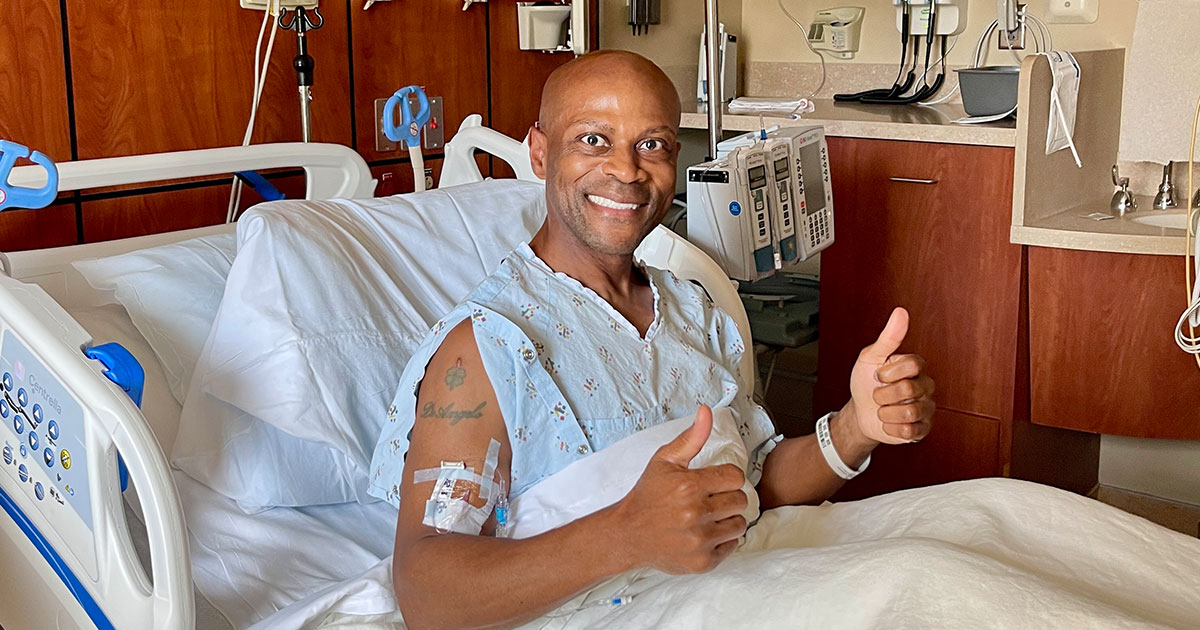
Fitness professional Tony Newberne spent his life helping others strengthen their bodies, until a rare blood cancer diagnosis at 39 forced him to fight for his own.
Tony Newberne built his life around health. As a fitness professional in North Carolina, he spent his days staying active and helping others strengthen their bodies — never imagining his own would become the center of a life-altering experience. While training a client, Newberne lost his footing and injured his back. He pushed through the pain, finished the session, and headed to the emergency room. Newberne was told to rest, wait a few weeks for the pain to improve, and was sent home.
Newberne was diligent about healing. He followed up with his doctor, adhered to guidance, and waited it out, but wasn’t getting any better. A month after his initial fall, Newberne collapsed at home and was rushed back to the emergency room. Within a few hours, he was discharged, much to his and his partner’s despair. With the unnerving feeling that something more was wrong, they refused to leave without more information. Determined and persistent, Newberne’s partner convinced the doctor to admit him. Newberne underwent extensive tests, not knowing how profoundly his understanding of health, vulnerability, and purpose was about to change.
After a few days in the hospital, Newberne, just 39 years old, was diagnosed with high-risk multiple myeloma on Sept. 18, 2013. His chances of survival before turning 40 were just 50%.
Building a team, finding purpose
While Newberne was well-educated in health and fitness, he recalls that his lack of understanding of his diagnosis was “frightening and isolating.” He met some of the criteria for myeloma risk factors. It’s a type of blood cancer more commonly diagnosed in men and is twice as likely to occur in those with non-Hispanic Black heritage compared to those with non-Hispanic white heritage. But most people who develop myeloma are over age 50. Newberne’s survival rate was below average at the time, though outcomes have improved largely due to advances in treatment.
Newberne approached his cancer diagnosis as a complex project. “I asked questions, gathered data, and built a team. I advocated for myself: learned the medical language, tracked labs and symptoms, and made informed decisions,” he recalls, “much like running a business with clarity, preparation, and communication.”
For over a decade, Newberne received multiple types of treatment for myeloma, supported by family, friends, and Blood Cancer United, formerly The Leukemia & Lymphoma Society. He relapsed in December 2024 and decided to undergo CAR T-cell therapy. Nine months later — nearly 12 years to the day of his initial diagnosis — Newberne heard for the first time that he was cancer-free.
A renewed sense of purpose
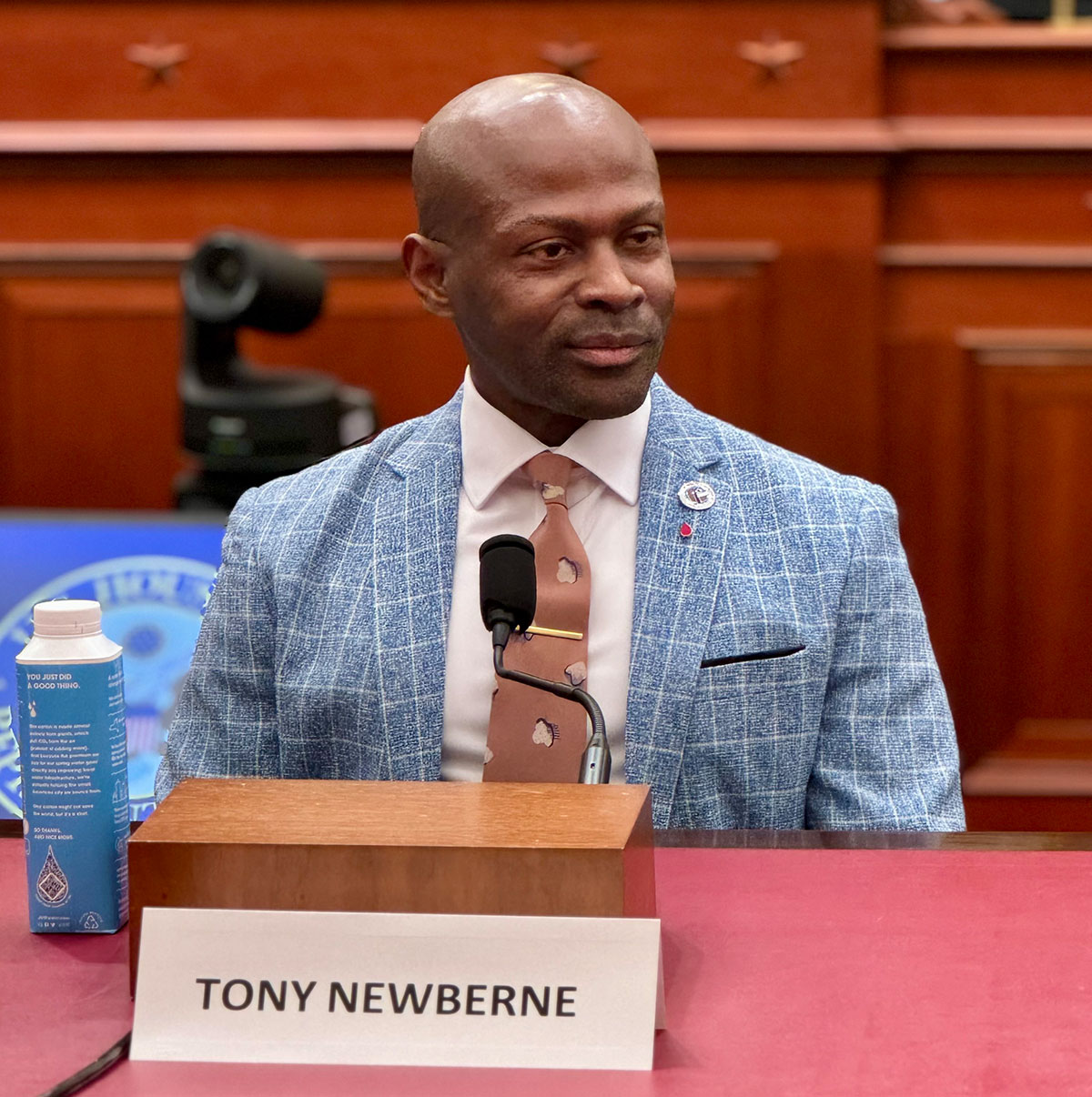
Today, Newberne channels his renewed sense of purpose into making a difference in others’ lives. He’s still training clients and owns his own studio. Newberne also volunteers as an advocate for Blood Cancer United. He’s learned that sharing his story doesn’t just inspire people; it shapes policies and decisions that affect real lives.
“These days, my priorities are alignment, meaningful relationships, sustainability, and joy,” Newberne said. “I’m less about doing everything, and more about doing what matters most.”
