
Preventing skin cancer and premature signs of aging starts with a proactive skincare approach and guidance from a board-certified dermatologist.

Kavita Mariwalla, M.D.
President, American Society for Dermatologic Surgery; Double Board-Certified Dermatologist; Mohs Surgeon; Founder, Mariwalla Dermatology
Patients often visit my practice once a concern has already surfaced, like a new or changing dark spot or deepening facial lines. While dermatologic surgeons have pioneered many of today’s treatments for these issues, the most powerful tool isn’t a laser or a scalpel; it’s prevention.
Your skin is your body’s largest organ and its first line of defense. Taking a proactive approach to skin health isn’t just about looking younger; it’s about supporting your health for decades to come.
Invisible accumulation
Skin cancer is the most common form of cancer in the United States, and often it is caused by cumulative exposure to ultraviolet (UV) light. Many people don’t realize that UVA rays, which are primarily responsible for aging and skin cancer, can penetrate glass. This means your daily commute or sitting by a sunny window at work contributes to photoaging, the breakdown of collagen and elastin that leads to wrinkles and sunspots long before they would naturally appear. Studies show that daily sunscreen use can reduce the risk of melanoma by 50 percent. This simple, proactive habit is the single most effective treatment to prevent skin cancer and early signs of aging.
Look beyond the surface
Proactive skincare also means being an advocate for your own body. I encourage patients to perform regular self-exams. The American Society for Dermatologic Surgery (ASDS) has free self-exam resources to help you know what to look for, including these ABCDEs of moles:
- Asymmetry (not uniform in appearance)
- Border irregularity (jagged or irregular borders)
- Color variability
- Diameter larger than a pencil eraser
- Evolving or changing moles
The role of your dermatologist
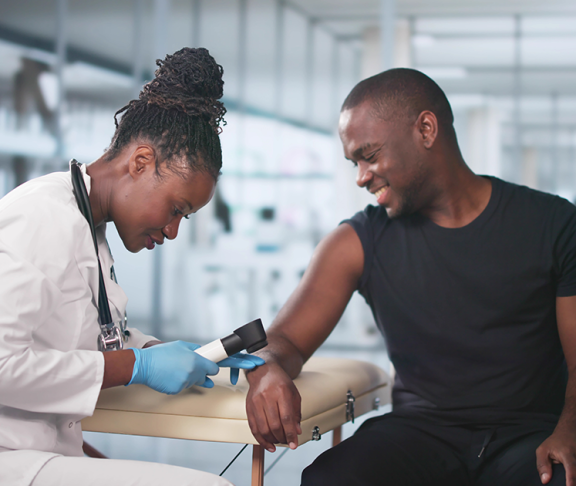
A board-certified dermatologist is a partner in your long-term wellness. It’s critical that you schedule an annual skin cancer screening to catch pre-cancerous growths before they become dangerous. A skin cancer screening is simply a visual examination of your body’s moles, freckles, and other marks. Your dermatologist will likely use a specialized tool called a dermatoscope to see deep into the skin’s layers to identify any precancerous spots, like actinic keratoses. By addressing these areas early, we can often prevent them from progressing into skin cancer. During your screening, you can highlight areas of concern and talk through next steps if a biopsy is necessary.
It’s never too late
Maybe you used tanning beds in college or used to lie outside for a sun-kissed glow. No matter your past, it is never too late to start implementing sun-protective measures. While it’s always better to start sooner rather than later, sun safety applies to everyone of all ages, genders, skin colors, and walks of life. While skin cancer is the most commonly diagnosed cancer in the United States, it’s also the easiest to prevent and treat when caught early.
For patients interested in rejuvenating their skin, your dermatologist can perform procedures to help reverse sun damage and prevent skin cancer, such as fractional laser resurfacing, chemical peels, dermabrasion, or intense pulsed light therapy.
Your journey starts now
Healthy skin is a marathon, not a sprint. Preventive measures aren’t just caring for your appearance; you are protecting your life. Your future self will thank you for the care you provide your skin today. Build a skin health regimen that includes daily broad-spectrum sunscreen use, seeking shade during peak sun hours, performing monthly self-exams, and visiting your dermatologist annually. Look for a board-certified dermatologist who is affiliated with reputable organizations, like ASDS, that support ongoing education and encourage scientific research. Find a local physician at asds.net/find.
