Researchers estimate that at least 15% of all childhood cancers are driven by genetic predispositions, yet testing for these syndromes is not yet routine.
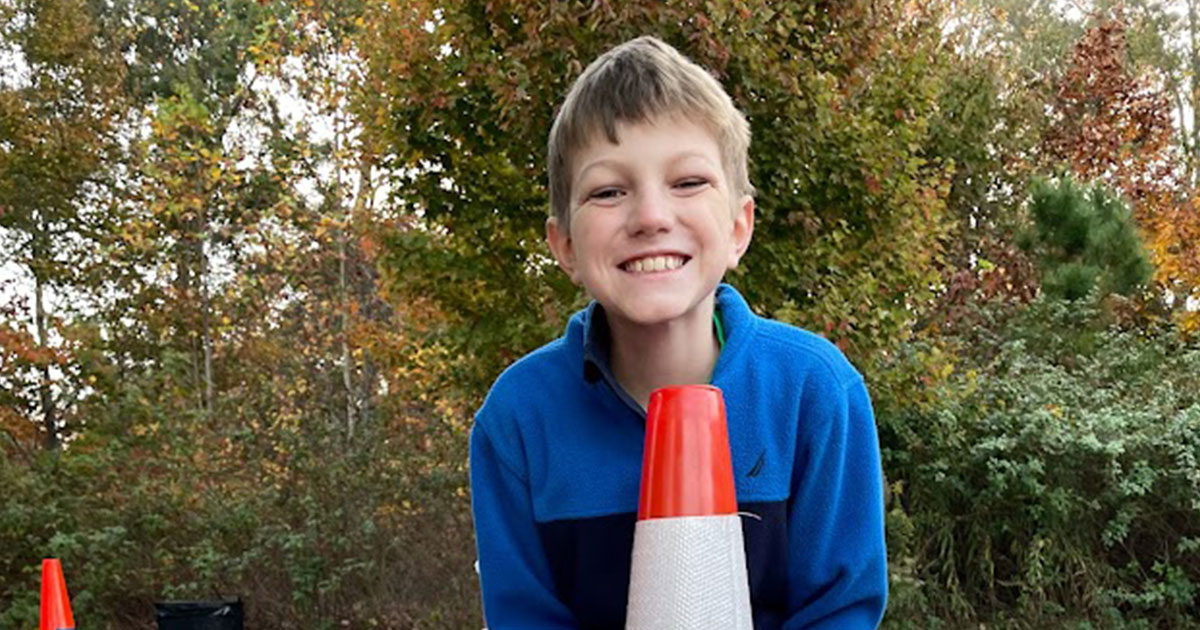
Rowan was 8 years old when he was diagnosed with medulloblastoma, the most common malignant brain tumor in children. He endured grueling chemotherapy, proton radiation, and brain surgeries. His family thought he was in the clear, but two years later, Rowan was diagnosed with a second brain tumor. This time, pathology showed that Rowan had a high-grade glioma — an entirely different tumor type.
Trying to understand the cause, Rowan’s doctors ordered genetic testing and found that Rowan’s two different brain tumors weren’t just bad luck or random mutations. Instead, they were driven by Li-Fraumeni syndrome, a rare genetic predisposition to cancer. The syndrome increases lifetime cancer risk between 70-90%. While Li-Fraumeni is inherited, many families aren’t aware of its possibility in their family medical history until someone, like Rowan, is tested following multiple cancer diagnoses.
Researchers estimate that at least 15% of all childhood cancers are driven by predispositions like Li-Fraumeni syndrome. Yet testing for these syndromes is not yet part of routine care for the general population — a gap that can delay diagnosis and worsen outcomes. Earlier identification could make a major difference in catching cancer in its earliest stages. Beyond increased surveillance, however, there is currently no treatment for cancer predisposition syndromes. And when cancer does occur in children with these conditions, their tumors tend to be more aggressive and harder to treat.
Groundbreaking research projects
To address both of these problems, Alex’s Lemonade Stand Foundation, the largest independent childhood cancer charity in the United States, funded two $5 million grants, both focused on cancer predisposition.
One of those projects is studying the implementation and promise of a genetic test using newborn blood samples, obtained with a heel stick at birth, to screen for several cancer predisposition syndromes. Heel-stick blood samples are already collected from newborns in all 50 states to screen for a variety of serious conditions. This research is exploring whether that same process could safely and effectively be used to identify cancer risk early in life. It could be a low-cost, efficient approach that could ensure children receive appropriate cancer surveillance and treatment as early as possible when cancer does develop.
The project is led by Dr. Sharon Plon at Baylor College of Medicine and Dr. Lisa Diller at Dana-Farber Cancer Institute, in collaboration with Brigham and Women’s Hospital in Boston and Texas Children’s Hospital in Houston.
Another project is studying the potential for a cancer vaccine that could provide an early-stage intervention for children with certain cancer predisposition syndromes. This project is led by Dr. Uri Tabori and Dr. David Malkin at The Hospital for Sick Children (SickKids) in Toronto.
Both projects have the potential to help kids like Rowan, who is now 12 years old and in seventh grade. He continues treatment for high-grade glioma. His mom, Charlan, continues to hope for a miracle cure for her son.
“I hope the future of childhood cancer is nonexistent, because the miracle cure for the root cause is discovered, developed, and delivered to all who need it,” Charlan said.
To learn more about Alex’s Lemonade Stand Foundation’s innovative Crazy 8 grant program and its work to cure and screen for cancer predispositions, visit crazy8projects.org.
