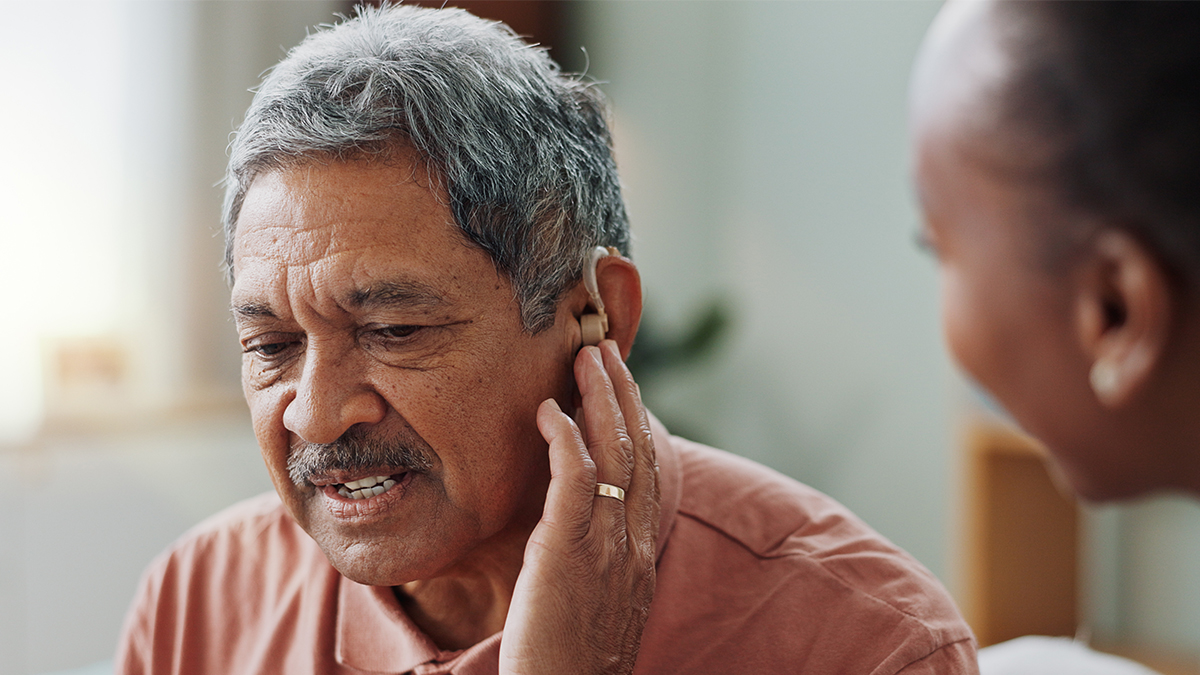
Understanding and addressing hearing loss starts with access to affordable and comprehensive hearing healthcare where patients with more subtle signs of hearing loss and those with limited financial means can be adequately diagnosed and treated.
Hearing is a fundamental part of how we understand our world. It helps us understand and locate what’s going on around us. The part of our brain most responsible for interpreting what we hear is the same part that creates memories and regulates our emotions. Hearing is how we relate to others and nurture relationships.
Fifty million people in the United States live with some level of hearing loss, yet the topic often remains sidelined during discussions about America’s health. It’s even dismissed in wellness visits, where some patients are told to “wait until it gets worse” or that they “can’t do anything about it.”
In some ways, that reaction is understandable. After all, hearing loss isn’t something you necessarily notice in other people. (It’s hard enough to know when you are experiencing hearing loss yourself!) There’s also a long-standing assumption that only older adults are at risk of hearing loss. But hearing loss can affect anyone at any age. It can happen gradually or suddenly and start the day you’re born or happen later in life.
Bringing awareness to hearing health
From veterans to industrial workers, concert venue staff to teens with earbuds, there’s a wide variety of people at risk from an increasingly loud world. The social and monetary costs of ignoring hearing health are too high, which is why the Hearing Loss Association of America (HLAA) has spent nearly 47 years raising awareness about the issue.
Policymakers, healthcare professionals, employers, and the broader public have a shared interest in making sure Americans have access to affordable and comprehensive hearing healthcare. Social isolation and loneliness, falls, depression, employment barriers, and the economic ripple effects of each are just some of the consequences that might occur from untreated hearing loss. That means hearing health deserves the same attention as other aspects of public health.
Right now, though, the tools that can help people live well with hearing loss are out of reach for many. The 2017 Over-the-Counter (OTC) Hearing Aid Act that allowed FDA-regulated hearing aids to be available over the counter without a prescription was a tremendous step forward. But self-treating a condition that’s often misunderstood — those OTC hearing aids are only designed for adults with mild or moderate hearing loss — puts people at risk of leaving the subtler causes and effects of hearing loss unexplored.
Increasing the coverage of hearing healthcare through trusted programs like Medicare, Medicaid, and the Children’s Health Insurance Program can help Americans live full lives with hearing loss. But getting there must start with all of us giving our hearing health more attention. You can get started by exploring HLAA’s Hearing Loss Toolkit at hearingloss.org/toolkit.
