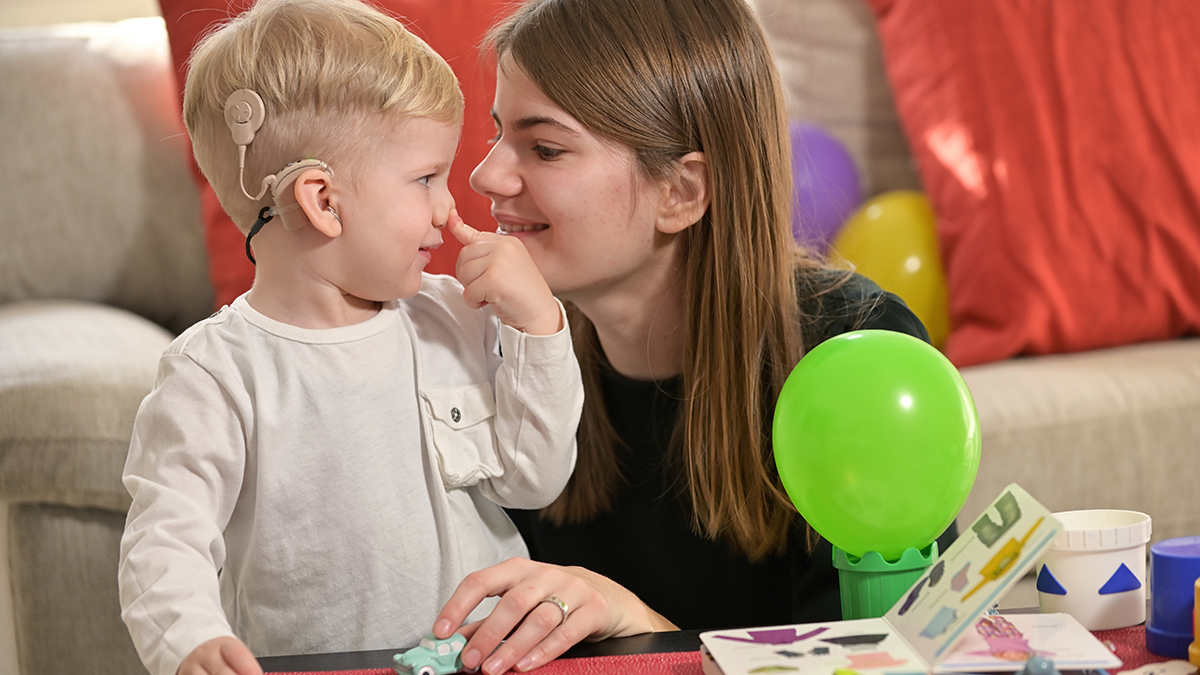
Hearing loss can range from mild to profound, but through the modern technology of cochlear implants (CI), this lifechanging procedure can give children with hearing loss the opportunity to experience fulfilling lives now and in the future.

Emilio Alonso-Mendoza
Chief Executive Officer, Alexander Graham Bell Association for the Deaf and Hard of Hearing
Around the world, more than 30 million children are deaf or hard of hearing, most of whom are born to parents with typical hearing. For many families, a hearing loss diagnosis can feel overwhelming and is often compounded by the common misconception that children who are deaf or hard of hearing will never be able to communicate with Listening and Spoken Language (LSL).
Thankfully, through modern technology, such as cochlear implants, children with hearing loss can excel at school and in sports and music and can go on to have successful careers and families of their own, living a life without limits. Hearing loss occurs when any part of the auditory pathway is not functioning correctly, disrupting the transmission of sound to the brain. Causes may be genetic, environmental, linked to illness, or in some cases, unexplained.
Hearing loss can affect one or both ears and range from mild to profound. Because it looks different for every child, early identification is crucial. That’s why newborns are screened for hearing loss by one month of age and will follow up with a pediatric audiologist who will diagnose the type and degree of hearing loss to help families explore the best technology and language options for their child.
For some children, hearing aids are a valuable first step in addressing their hearing needs. However, if hearing loss is severe or profound, hearing aids do not restore hearing to typical levels which makes listening and spoken language difficult.
A surgical option that changes lives
That is where cochlear implants can change lives. Since their introduction in the 1970s, cochlear implants have opened the door for thousands of children to listen, speak, and fully engage in the world around them. Unlike hearing aids, cochlear implants are surgically implanted devices that bypass damaged cells in the cochlea and send sound signals directly to the brain. External and internal components work together to help the brain interpret sound, providing children with access to speech and environmental cues.
Research suggests that implantation is most effective for young children, ideally before the age of one. The U.S. Food and Drug Administration (FDA) has approved cochlear implantation for infants as young as nine months of age, although children who are even younger have successfully received the devices.
The decision to pursue cochlear implants is not simple. It requires medical evaluation, audiological guidance, and reflection on family goals. For parents who choose LSL for their children with severe or profound hearing loss, cochlear implants are the optimal choice. Starting this journey can feel daunting, but families are not alone.
The Alexander Graham Bell Association for the Deaf and Hard of Hearing offers resources, parent support, and expert guidance to ensure every child has the opportunity to thrive. Visit AGBell.org to learn more.
