
Torsten Gross wants everyone to have the freedom to get behind the wheel. Volkswagen is doing its part.
Torsten Gross has never let anything stand between him and his goals. After a diving accident left him a C6 Quadriplegic (with no control or sensation in his lower body and limited movement below his neck) at the age of 15, he could have accepted the limitations of his condition. Instead, he became the world’s only quadriplegic rescue scuba diver, and completed 12 marathons in 12 months — among many other achievements.
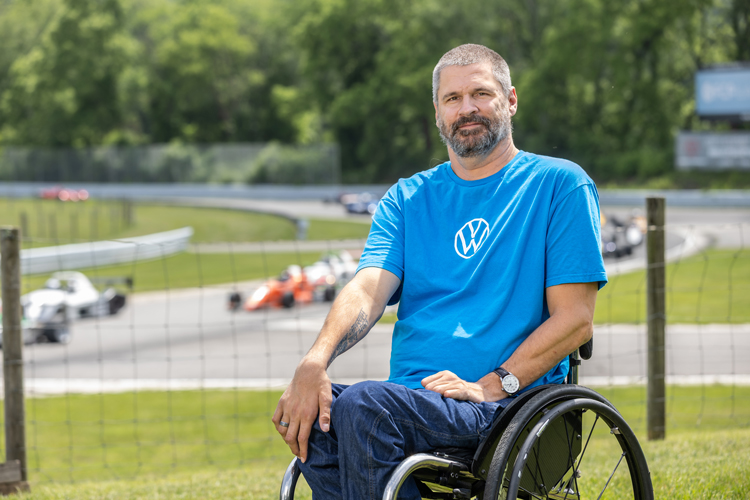
“I never see obstacles as things that I have to overcome,” he said. “‘No,’ to me, is just a request for more information.”
His most recent achievement — becoming a race car driver — is especially important to him. “Performance driving is the only sport on the planet that makes us equal to able-bodied people,” he said. “The car does not care that I’m in a wheelchair. Nobody on track knows that I’m in a wheelchair.”
Just Hands
Gross was determined to share this sense of freedom and equality with other people with disabilities. That desire led him to launch his nonprofit, Just Hands.
“I’ve been in the chair now for 32 years,” he explained. “I want to remove barriers for other people so that they don’t need to start from square one. What we do at Just Hands is, we get adaptive drivers to experience equality. I wanted people to be able to experience what I get to experience.”
The impact has been obvious — and profoundly emotional. “One woman I met, she’s been in the chair for nine years,” Gross said. “She was in a car accident and had not driven since. I said, well, your streak ends today. And I put her behind the wheel of the car, and we just drove around the paddock for a little while. She burst into tears. That has kind of changed her life.”
The disability tax
Some of the challenges people with disabilities face when getting behind the wheel of a car are personal. But many of the obstacles preventing a disabled driver from driving a car are much more practical — and in some ways more difficult to overcome.
“There’s something I call the disability tax,” Gross explained. “Being in a chair comes with a financial burden. If you want to go skiing, it’s $120 for the season rental — but it’s a $5,000 monoski for us. If you want to play basketball, it’s an $80 basketball and you go to the public hoops — but it’s a $6,000 basketball chair for us.”
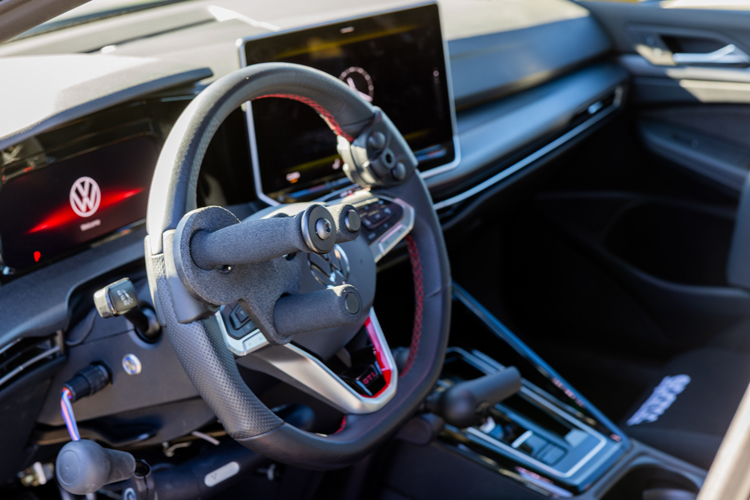
Standard model cars must have adaptive technologies installed to allow people with disabilities to drive them, like hand controls or wheelchair lifts. On top of the cost of the car itself, people often assume these modifications are beyond their budgets.
That’s one reason Gross was excited to join forces with Volkswagen of America and become a brand ambassador for its Driver Access Program.
Driver Access
“There’s this belief that it costs an astronomical amount to adapt a car,” Gross noted, “and that companies like Volkswagen will not help. And that’s just not true.”
“The whole purpose of Volkswagen’s Driver Access Program is to make sure we’re making Volkswagen accessible,” explained Rachael Zaluzec, senior vice president, customer experience and brand marketing at Volkswagen of America. “We want our vehicles to be accessible for passengers, but also for drivers with disabilities.”
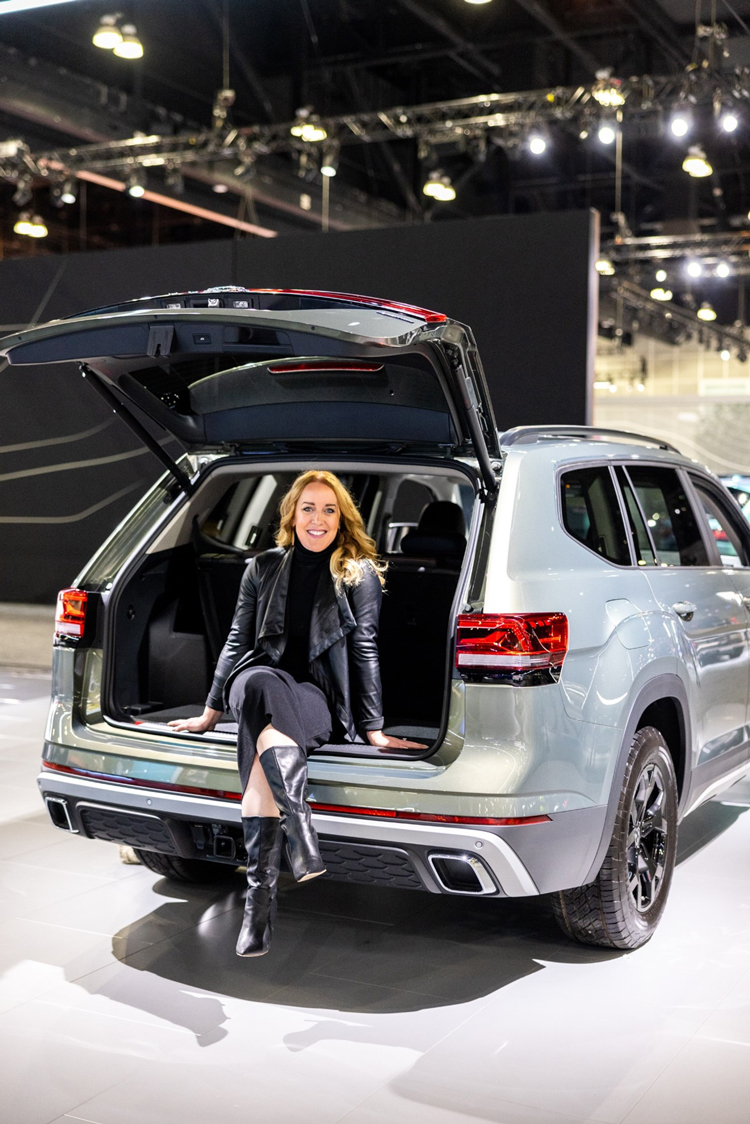
The program provides up to $1,000 in reimbursement for eligible modifications on select vehicles to offset the cost of the adaptive equipment. The process is straightforward: An owner has the modifications done at an adaptive equipment installer of their choice within the program timeframe, then they submit a driver access form (which is found on vw.com) and required documentation within the same timeframe. Once everything is submitted and approved, the reimbursement will be sent directly to the owner.
“It is a sea of confusion out there when it comes to accessibility and adaptive equipment,” Gross noted. “Volkswagen’s Driver Access Program is easy, and that is not the norm in our community. It’s amazing to have an access program that makes us equal again — not just equal on the track, but equal in everyday life — and you’re now making us equal financially, too.”
Getting it right
Zaluzec and Gross met at an auto show, where they bonded over their marketing careers and shared love of scuba diving. That meeting led to a collaboration that has been mutually powerful.
“Having Torsten’s voice, his input, is so important,” Zaluzec said. “We don’t want to assume. An engineer can sit at a table and say, we think this might be good. Well, great — but until you have a practical application of it, and somebody who has the bold willingness to share their opinion, we’re never going to get it right.”
For his part, Gross is focused on moving the needle for his community. “It is hyper important to have the community involved,” he said. “Things move slowly in every business, but bring on those people who will help accelerate it. And I’m one of them. I want to improve the product. How would it work for us? How would it work for a C6 quadriplegic?”
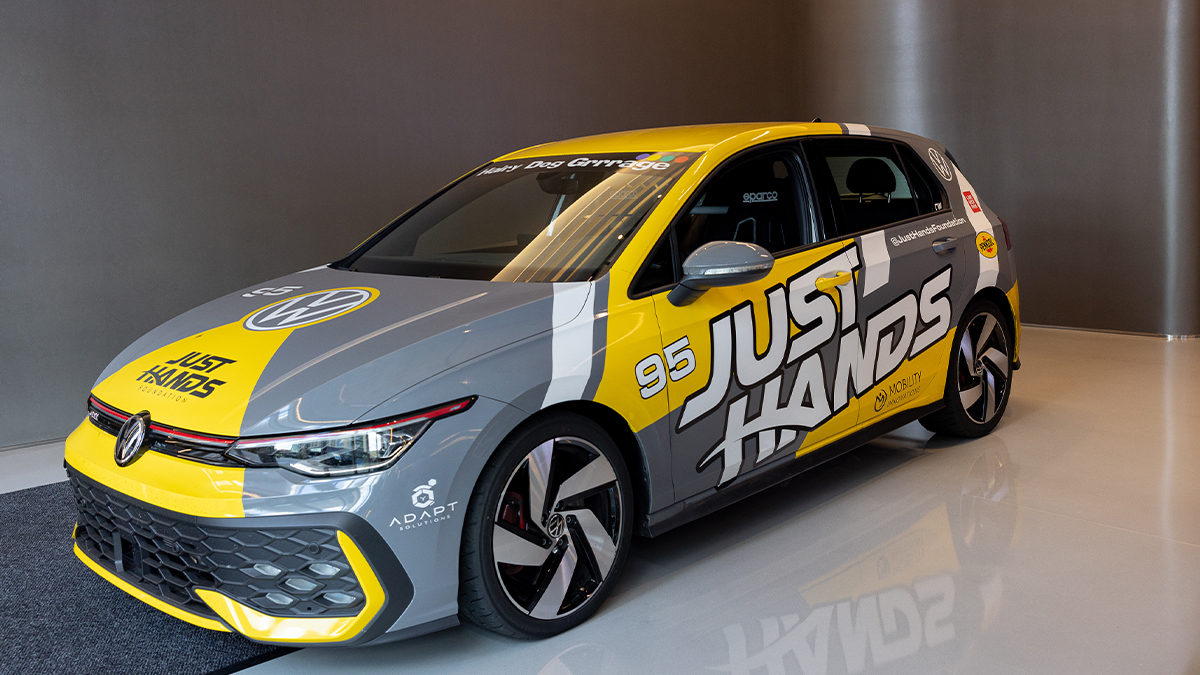
Volkswagen supported Just Hands through a marketing collaboration by providing the organization with its own GTI. Just Hands then worked with a third-party installer to add adaptive modifications, helping address the organization’s six-year waiting list caused by a shortage of vehicles.
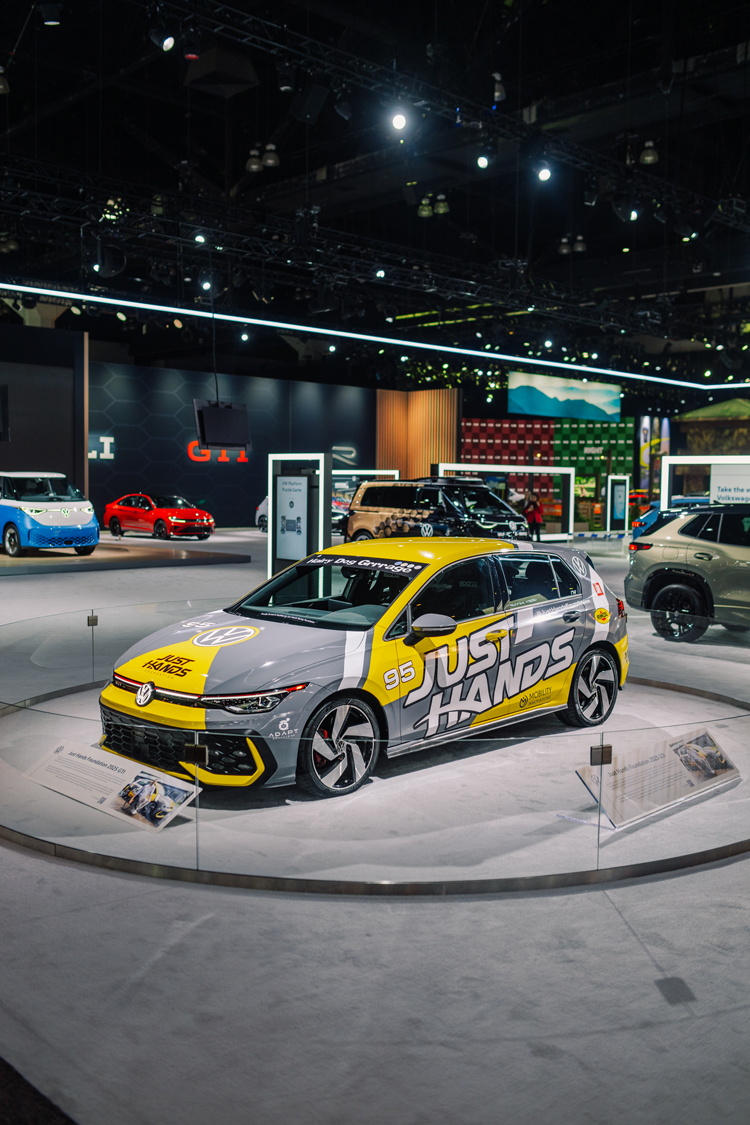
“You know, I like to think of myself as a fairly manly man,” Gross said with a laugh, “but I cried at that moment, because here’s literally a car rolling up that is the exact same car I drove 30 years ago.”
For Zaluzec, moments like that are what it’s all about. “That’s the power of the relationship we have with Torsten. Between the things he’s doing to empower so many people to be mobile and what I can do behind that, with the strength of the Volkswagen brand, it’s just unbelievably cool.”
Gross believes he’s found the right team — and a true partner — with Volkswagen. “To have a company that actually cares, and doesn’t just want to use somebody that looks like me as a token, is so special,” he said.
For more information about Volkswagen’s Driver Access Program, click here
