Knowing whether your breasts are dense can guide smarter screening decisions and help catch cancer earlier when it’s most treatable.
JoAnn Pushkin
Executive Director, DenseBreast-info.org; 2025 Honorary Fellow, Society of Breast Imaging
After a mammogram, all patients are now told whether their breasts are “dense” or “not dense.” Patients with dense breasts are also informed that dense tissue makes it harder to find breast cancer on a mammogram, raises their risk of developing breast cancer, and that other imaging tests after a mammogram can help find cancers.
Facts to know:
- Dense breast tissue is normal and common. 40% of women aged 40 and over have dense breasts.
- Dense breast tissue increases risk. Cancer is 4 to 6 times more likely to develop in extremely dense breasts than in the least dense (fatty) breasts.
- Dense breast tissue hides cancers. Although mammograms find some cancers not seen on other screening tests, in extremely dense breasts, about 40% of cancers present will be hidden.
- In dense breasts, after a mammogram, other screening tests, such as breast MRI (or ultrasound if breast MRI is not possible), substantially increase the detection of early-stage breast cancers.
Can I tell if I have dense breasts by the way my breasts look or feel?
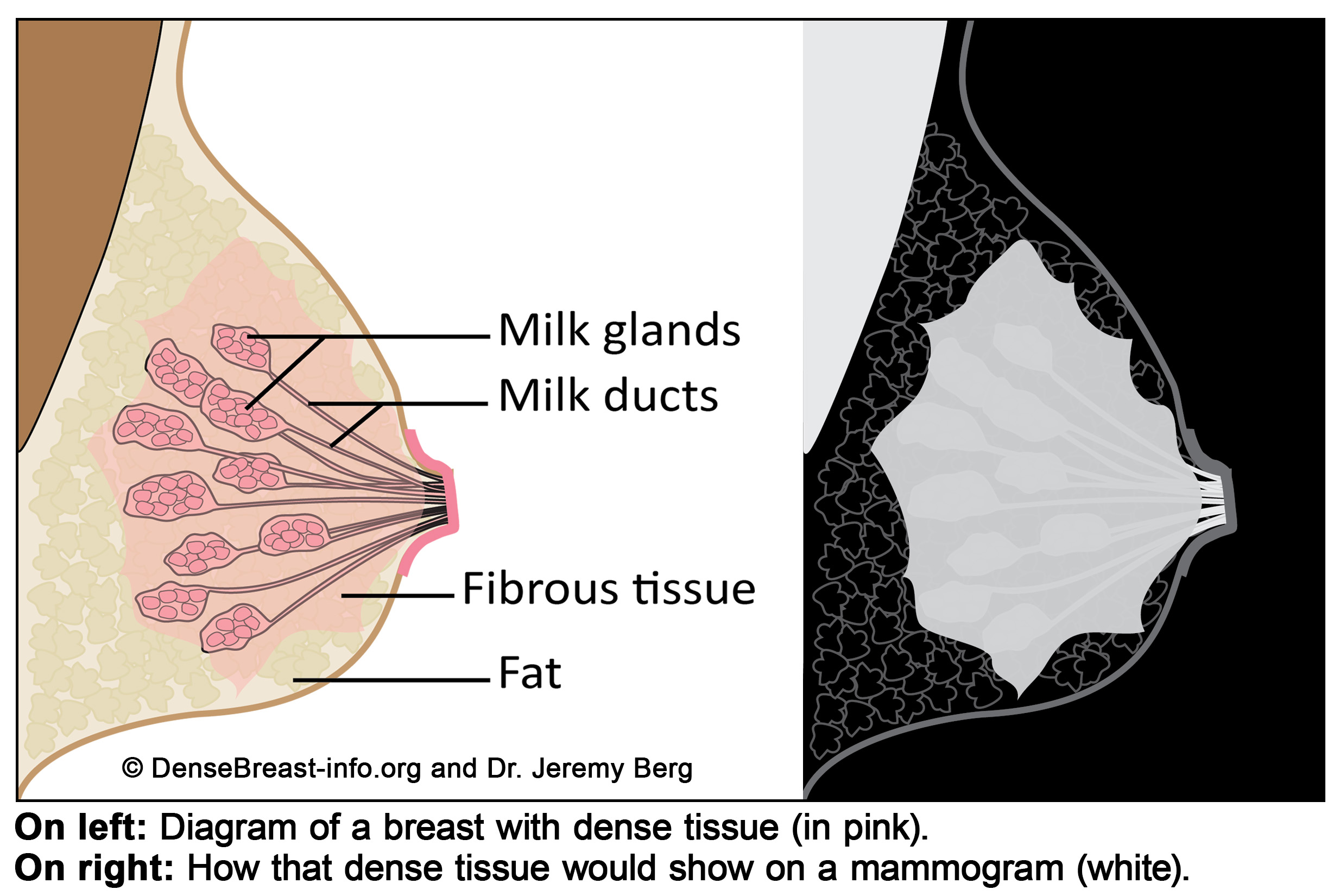
No. Breast density is determined by the doctor who reviews the images from your mammogram. The more glands and fibrous tissue compared to fatty tissue that a woman has, the “denser” her breast tissue is.
How do I know if I have dense breasts?
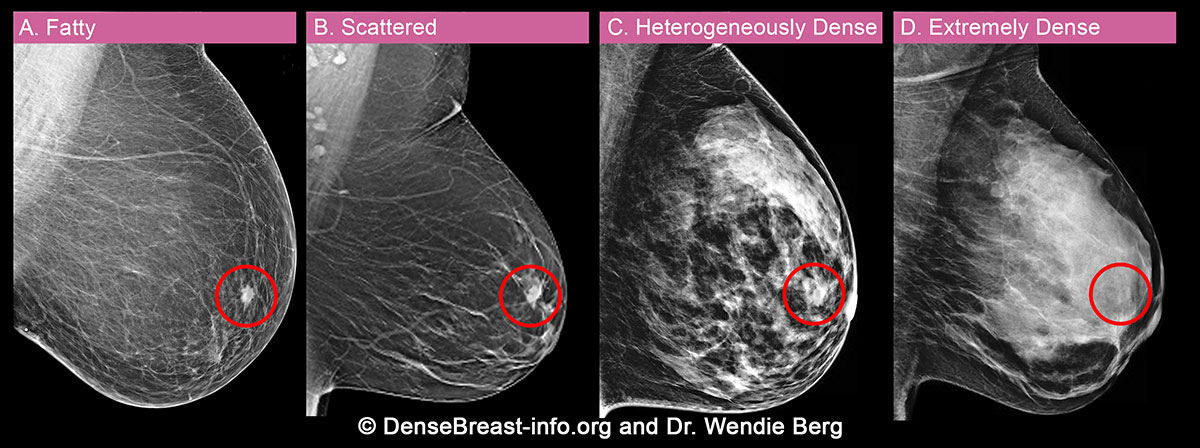
When you have your mammogram, your breast density is rated as one of four categories in the mammogram report:
- Fatty
- Scattered areas of fibroglandular density
- Heterogeneously dense
- Extremely dense
Breasts that are heterogeneously or extremely dense are considered “dense” breasts.
How does dense tissue affect my mammogram?
Dense breast tissue is white on a mammogram, and fatty tissue appears dark gray. Unfortunately, cancers are also white on a mammogram, and a cancer can be “hidden” by the dense tissue, even if the mammogram is done with 3D/tomosynthesis. For women with dense breasts, a “normal” or “negative” mammogram does not necessarily mean cancer is not present.
What about insurance coverage for additional screening tests?
Generally, if your health provider feels additional screening is medically necessary, it will be covered, although copays and deductibles may apply. Currently, 36 states plus Washington, D.C. have passed insurance laws to cover some level of additional screening after a mammogram. However, state laws vary, coverage is not assured, testing may still be subject to out-of-pocket costs, and many types of insurance plans are exempt from state insurance laws.
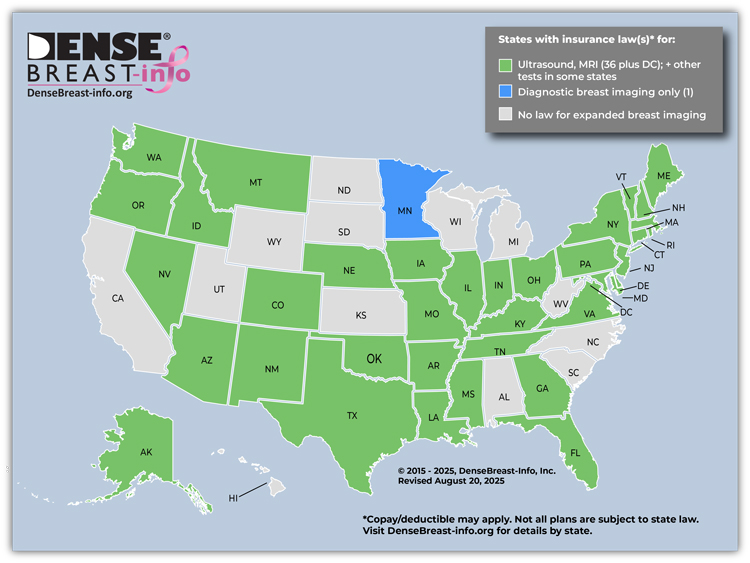
Now that all women are told if they have dense breasts, all women should have access to the additional screening their doctor determines necessary. A federal insurance bill, the Find It Early Act, has been introduced that would ensure that all insurance plans cover screening and diagnostic breast imaging with no out-of-pocket costs for women with dense breasts or at higher risk for breast cancer, see FindItEarlyAct.org.
Early detection matters. Be an informed self-advocate and ask the question, “Is my mammogram enough?” Visit DenseBreast-info.org to learn more.
