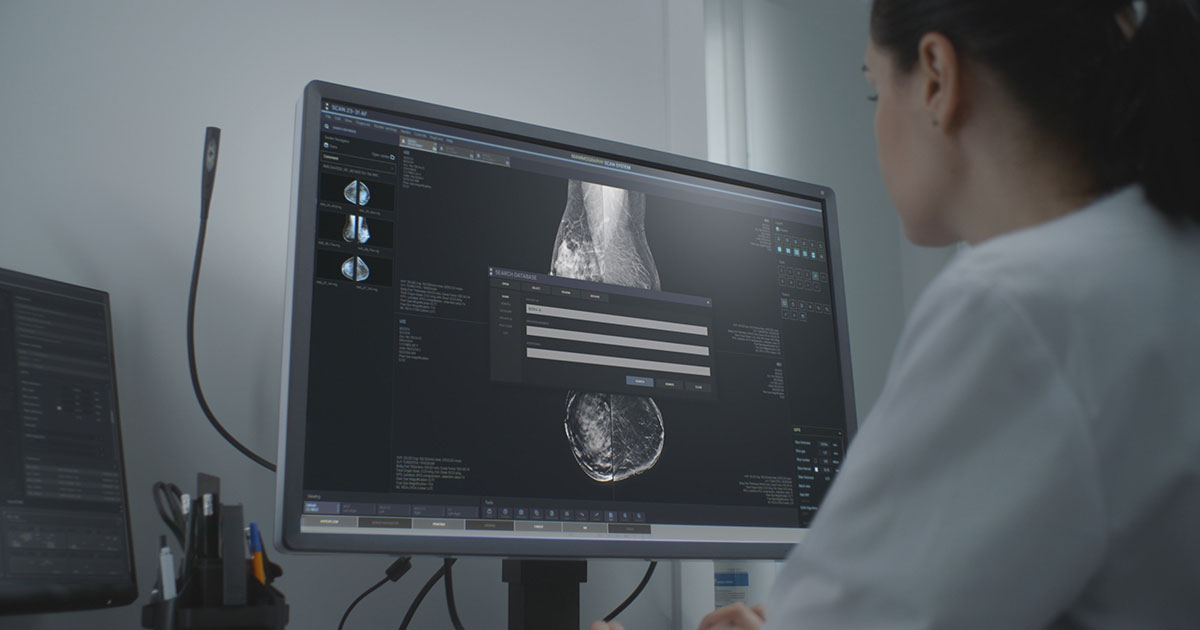
For decades, mammography has been a tool for detecting breast cancer after it appears. Now, artificial intelligence (AI) is poised to reshape that paradigm by helping doctors predict which women are most at risk for developing breast cancer in the first place, long before it appears.
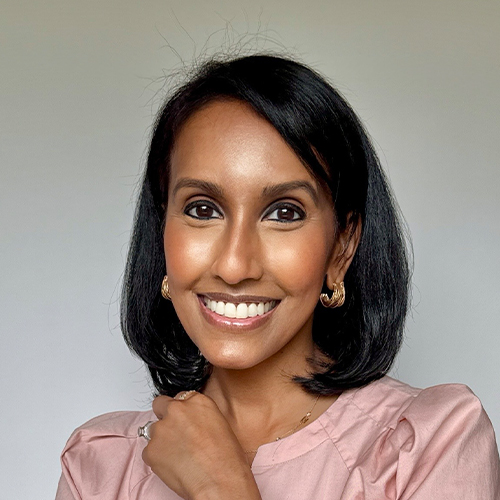
Sadia Zapp
Managing Director of Communications and Content, Breast Cancer Research Foundation
To better understand this transformation, I sat down with Dr. Constance Lehman, a leading expert in breast imaging and professor of radiology at Harvard Medical School, whose pioneering research is redefining early detection and prevention. Dr. Lehman is also the founder of Clairity, Inc., which received the first FDA approval for the AI platform Clairity Breast, to predict a woman’s risk of developing breast cancer within five years from a single mammogram.

Constance Lehman, M.D., Ph.D.
Professor of Radiology, Harvard Medical School; Founder, Clairity, Inc.
How is AI changing the way we understand breast cancer risk?
For the first time, we’re able to use mammography not just to find cancer, but to predict who is likely to develop it. AI algorithms can analyze millions of mammogram images, detecting subtle patterns that even the most experienced radiologists might miss. These insights allow us to identify women at higher risk years before the disease develops. It’s a complete shift from diagnosing cancer to preventing it.
Traditional risk models have existed for years. What’s different about AI-driven ones?
Traditional models rely on factors like family history, age, or reproductive history — information that’s often incomplete or subjective. They also tend to underrepresent women from diverse racial and ethnic backgrounds. AI changes that by looking directly at the imaging data. It uses objective, image-based signals that are specific to each woman, providing a far more accurate and equitable risk prediction.
Why is this particularly important for younger women?
Most young women diagnosed with breast cancer don’t have a family history or genetic mutations. They typically wouldn’t be flagged as “high risk” under traditional models. However, AI can detect biological patterns in breast tissue that reveal early susceptibility, even when everything else looks normal. This means we can tailor screening and prevention for women who might otherwise slip through the cracks.
How might predictive imaging change how doctors and patients make decisions?
Predictive imaging allows for true personalization of care. If we know a woman’s risk level early, we can recommend screening at the right frequency, introduce preventive interventions if appropriate, and help her make informed lifestyle or clinical choices. It’s about replacing one-size-fits-all medicine with data-driven precision and, ultimately, giving women more control over their health.
What do you see as the biggest opportunity for the future of AI in healthcare?
The potential is enormous. AI can help us move from a world where we react to disease to one where we anticipate and prevent it. For breast cancer, that means fewer diagnoses, less suffering, and more lives saved. However, it also requires trust, ensuring these tools are validated, transparent, and used equitably for all women.
